


Welcome to the Best BG3 Light Cleric Build Guide. For this Cleric build, we’ll be using the Light Domain subclass of the Cleric. The BG3 Light Domain Cleric Build is the ultimate support character with powerful healing and buff spells. It is also great at staying alive!
For more Cleric builds, visit our BG3 Cleric Builds page or explore the complete BG3 Builds Database. We also have a powerful BG3 Shadowheart Build. You can also check out our BG3 Builds Tier List to see which builds perform best.
Table of Contents for the BG3 Light Cleric Build:
- Light Cleric Build Overview
- Cleric Build Character Creation
- Cleric Build Levelling Progression
- Cleric Equipment
- Cleric Build Extra Info
Contrary to what you might expect from a class of this nature, we’ll also be using a bow as our main damage-dealing option when not casting spells for our Cleric build. The reason for this is that the Cleric’s main damage Cantrip is quite weak compared to other Spellcasters.
Light Domain Clerics gain abilities that relate to light and fire, debuffing enemies or dealing damage, or simply lighting the way for their allies.
Here are the main Strengths and Weaknesses of the BG3 Light Cleric
Light Cleric Strengths
Light Cleric Weaknesses
BG3 Cleric Build Overview
BG3 Clerics come in several varieties, but all of them live to enact their deity’s will and power in the world.
Clerics are highly skilled with magic, with access to a range of powerful spells that can deal heavy damage to enemies, debuff them, or buff allies. They also have arguably the best selection of healing spells in the game. They also possess decent skill with some weapons, both melee and ranged, and can wear armour.
All of these properties mean that Clerics are strong hybrid characters, versatile and formidable. A good Cleric build forms the core of your team and can adapt to fill a variety of roles when needed.
The unique class mechanic of Clerics is called Channel Divinity – your Cleric will have a limited number of Channel Divinity charges per Long Rest, and these can be spent to use special abilities. The exact abilities your Cleric can use depends on your chosen subclass.
Clerics can feel a little bit weak at the start of the game since they start with a weak weapon, mediocre armour and a selection of spells that are mostly low-impact, but from around Level 5 onwards, your Cleric will begin to become much more powerful thanks to more powerful spells.
One other problem that commonly presents itself with the Cleric is their lack of a good Cantrip – they do not have access to cantrips like Fire Bolt or Ray of Frost, two of the best Cantrips for dealing damage – this is replaced by Sacred Flame which tends to have a comparatively low hit chance, especially early in the game. Therefore, it’s recommended to use a bow instead of cantrips to attack on turns where you aren’t casting spells. The type of bow you can use depends on your chosen race, but we will explain that in more detail in the guide below.

BG3 Cleric Subclass Comparison
There are eight subclasses of the Cleric in BG3. The various subclasses are quite similar, but have some different Actions, Spells and Passives that give each subclass a unique identity.
In this build, we are using the Light Domain subclass. However, we also have a build for all other Cleric subclasses. If you want to explore these, you can find them all below. Alternatively, you can click here to skip to the start of the build guide.
Life Domain
Tasked with the holy edict of preserving the body, mind, and soul, your god grants you a plethora of healing magics.
Life Domain Clerics are focused on maximising your healing output. You get an extra Action called  Preserve Life, which lets you heal nearby allies. You also get a passive called
  Disciple of Life that adds extra HP to your healing spells, and at higher levels, you also restore your own health when you heal an ally. The Life Cleric gets automatic access to spells that heal and protect your allies. They also get Heavy Armour Proficiency.
Life Clerics are very well suited to a healer, or healer/tank hybrid build. The only downside is that they have fewer damage options than some other Cleric subclasses, but they can mostly make up for this at higher levels when you gain access to more powerful spells.
See More: Baldur’s Gate 3 Life Domain Healer Cleric Build
Light Domain
Gods of primordial flame bathe you in resplendent light, providing magics to dispel darkness and immolate enemies.
Light Domain Clerics get access to  Warding Flare, which lets you spend your Reaction to impose Disadvantage on an attacker. At higher levels, you can also protect your allies with this ability. Light Clerics also get access to the
  Radiance of the Dawn Action, which deals AoE Radiant Damage to all nearby enemies. The AoE damage is already very helpful, but in this build guide, we will see how this synergises with some equipment to make the Light Domain Cleric great at debuffing enemies as well as damaging them.
The Light Domain Cleric gets access to a lot of AoE Spells that revolve around light and fire. The only downside of this subclass is that it can’t wear Heavy Armour, but with the help of Warding Flare, it doesn’t really need it.
This is the subclass we’ll be using in this build. Click here to skip to the start of the build guide.
Trickery Domain
You wield the unorthodox divine tools of deceit and illusion in worship of your chosen deity.
Trickery Domain Clerics are good at stealth and manipulation. They can summon illusions to distract enemies, and can use  Blessing of the Trickster to grant a friend Advantage on Stealth checks. At higher levels, they can become Invisible if they are already Obscured by shadows.
 Divine Strike at Level 8, which adds 1d8 extra Poison damage to your Cleric’s weapon attacks. Divine Strike is not unique to the Trickery Cleric, though; several Cleric Subclasses have access to a variant of this passive.
Knowledge Domain
Adaptable and adroit in all manner of languages and skills, your mind is an intellectual cup brimming with exquisite knowing.
As their name suggests, Knowledge Domain Clerics are well-studied and know a lot about the world around them, enjoying access to extra Skill Proficiencies. At higher levels, they get to read the thoughts of characters they speak to, and can buff their Cantrips with extra damage sourced from their Wisdom Modifier.
They get innate access to spells that mainly focus on debuffing and stunning enemies. The Knowledge Cleric is not bad, but it is a little unspectacular compared to the more powerful Cleric subclasses like Light and Life.
See More: Baldur’s Gate 3 Knowledge Domain Cleric Build
Nature Domain
You embody the vast viridian power of the natural world, an avatar of the subtle divinity of fruitfall, avian migration, woodland silence, and the landslide’s roaring fury.
The Nature Domain Cleric is a slightly strange variant of the Cleric that combines the Cleric class with a couple of aspects of the Druid class, but stops far short of the Druid’s animal transformations (you’ll need to multiclass if you want your Cleric to be able to do that). They gain access to one Druid Cantrip and can use their Cleric powers to Charm nearby Animals and Plants for 10 turns.
At higher levels, they can use a Reaction to protect their allies against Acid, Cold, Fire, Lightning and Thunder Damage (halving the damage of one attack of these types), and can use Divine Strike to deal 1d8 extra Cold, Fire or Lightning Damage with their weapon attacks. Their innate Domain Spells include spells that channel the forces of nature to hinder and damage allies, including the powerful Insect Plague spell at level 9.
The Nature Domain is a very thematic subclass, but it isn’t very powerful (relative to the other Cleric Subclasses – all Clerics have the potential to be very strong, the subclass is just the topping) and its strongest spells can be unlocked by other Clerics as a part of the leveling up process. They do have automatic Heavy Armour Proficiency, though.
See More: Baldur’s Gate 3 Nature Domain Cleric Build
Tempest Domain
Your faith has made you the very thunder that quakes the black firmament, the lightning coursing through the veins of a terrible storm.
Tempest Domain Clerics channel the power of storms to bolster their combat prowess. They can use their Reaction to retaliate against attacking enemies with Lightning or Thunder damage. They can also use their Reaction, along with a Channel Divinity Charge, to force one of their Lightning or Thunder attacks to deal the maximum possible damage.
At higher levels, they can push enemies away by hitting them with any Lightning or Thunder damage, and they can use Divine Strike to infuse their weapon strikes with 1d8 Thunder Damage. Tempest Domain Clerics get access to a pretty strong range of innate Spells, including  Call Lightning,
  Freedom of Movement and
  Insect Plague. They also get Proficiency with Heavy Armour and all Martial Weapons.
Tempest Domain is a decent subclass, but I think it falls a bit short of the Light and Life subclasses.
See More: Baldur’s Gate 3 Tempest Domain Cleric Build
War Domain
Fortified by holy zeal, you brandish an arsenal of sacramental savagery to use against those you deem unrighteous.
War Domain Clerics get automatic access to Heavy Armour and Martial Weapon Proficiency. They get a unique resource called War Priest Charges, which can be spent to make additional attacks as a Bonus Action. They can also spend a Channel Divinity Charge to add a +10 bonus to one of their Attack Rolls, making a hit very likely. At higher levels, this benefit can be extended to allies. They can also use Divine Strike to deal 1d8 bonus damage with their weapons (from level 8).
One of the Cleric’s main appeals is its powerful magic including many strong Concentration Spells, but the War Domain Cleric seems to be a difficult matchup with this, as it incentivizes melee combat where you’ll have a harder time maintaining any Concentration spells. Still, this can be a decent subclass and the +10 Attack Roll buff can be very helpful in the right situation.
See More: Baldur’s Gate 3 War Domain Cleric Build
Death Domain
The Cleric of Death subclass focuses on Necromancy and dealing extra Necrotic Damage to enemies. They can spend their Channel Oath charges to infuse Necrotic Damage into their melee attacks, including melee Spell Attack Rolls. They can split Necromancy Cantrips that usually target one creature, allowing them to hit two enemies instead.
See More: Baldur’s Gate 3 Death Domain Cleric Build
Character Creation (Level 1) – BG3 Cleric Build

In this section, we will guide you through which options to choose in Character Creation for your BG3 Cleric Build.
Important: You also already have to select your Subclass at level 1, this can be easily overlooked because the game pushes you directly to the main class and then just selects the first option in the subclass menu. Therefore make sure that you have selected the Light Domain subclass. If you missed this (or want to use this build for Shadowheart), then visit Withers in your Camp to respec (you first need to find him in the ruins near the Nautiloid crash site in Act I).
Best Race
First off, it is important to note that you can pick whatever race you want; it won’t affect your gameplay that much. However, there are, of course, slightly better races for our Cleric build in Baldur’s Gate 3. For example, one very useful thing we can get from our race is Longbow Proficiency. The Cleric’s main damage Cantrip is Sacred Flame, which has quite a low success rate, especially in the early game. One way around this is to use a ranged weapon instead, and Longbows have pretty good damage.
Our top 5 picks for the best Cleric race are:
| Race | Strengths | Info |
|---|---|---|

Wood Elf |
|
Wood Elves are a great choice for most build types in BG3, thanks to their superior movement speed. Natural Proficiency in Perception is always useful, and immunity to magical Sleep will help you out a lot, especially in the early game, where enemy mages love to spam this spell.
You can also use a Half Wood-Elf for most of the same benefits. |

Duergar |
|
With their wide choice of armour and weapon proficiencies, and resistances to poison, charm, and paralysis, Duergar are one of the strongest races in BG3.
The only downside of Duergar is their small stature – this reduces their base Movement Speed to 7.5 metres per turn (most races get 9 metres). |
|
High Elf |
|
Very similar to Wood Elf, but missing the Stealth Proficiency and doesn’t get extra Movement Speed.
You can choose an extra Cantrip to learn, which is handy but not super important. |

Githyanki |
|
The Githyanki gives you a good range of weapon Proficiencies and innate access to Enhance Leap and Misty Step, which give you excellent mobility. Astral Knowledge makes your character very versatile with their Skill Proficiencies, as long as you remember to use it.
Additionally, Githyanki get the full benefits from equipping various Githyanki weapons, sometimes granting additional Psychic Damage or special features. |
|
Dragonborn, Any |
|
Dragonborns get access to a special Breath attack they can use once per Short Rest, which deals elemental damage in a directional AoE. They also get 50% Resistance to the same element. The damage element in question depends on which Dragonborn variant you choose.
The Fire and Poison variants are slightly better because many enemies attack with these damage types, making resistance to them more valuable. But don’t let this stop you from using whichever type of Dragonborn you like the most. Since we’ll be spending a lot of time in close range, the Dragonborn Breath attacks can fit in quite nicely with the Cleric playstyle.. |
 Stealth and
  Perception
 Shortswords
 Longswords
 Shortbows
 Longbows
 Fey Ancestry
 Charmed
 Magical Sleep
 Darkvision
 Fleet of Foot
 Medium Armour
 Dwarven Resilience
 Poisoned
 Superior Darkvision
 Duergar Resilience
 Paralysed
 Enlarge
 Invisibility
 Light Armour &
  Greatswords
 Astral Knowledge
 Enhance Leap

Cantrips
In the Class menu, you need to choose three Cantrips to start the game with, from four options. We recommend getting the following Cantrips:
 Guidance – This is a great ability for out-of-combat situations, and can be cast either on yourself or on an active ally from within the dice roll screen, letting you gain 1d4 boost to a range of dice rolls.
- Resistance – Bolster the target’s defences, giving them a 1d4 bonus to Saving Throws. This is a Concentration Spell. Can be used in some dialogue encounters in the same way as Guidance, but these are a bit less common.
- Sacred Flame – This is the Cleric’s main damage Cantrip. It suffers from low hit chance because enemies can perform a Wisdom Saving Throw to completely block the damage. Still, there are situations in BG3 where Radiant Damage is really good and I’ve seen this hit for over 80 damage, so it’s worth slotting as long as you know its limitations. Check the hit chance before casting, and if it’s below 70%, check for better options before proceeding.


Spells
You’ll need to choose four Spells to prepare, from a list of 10 known Spells. We recommend choosing the following Spells:
- Guiding Bolt – This is a must-pick, because it can deal up to 24 ranged damage right from the start of the game, which is very nice early-game damage. As a bonus, the next person to attack the target will have an
 Advantage against them.
 - Healing Word – Useful for healing yourself or your allies. At first glance, you might wonder why we chose this instead of Cure Wounds, which has a higher potential healing value. That’s because this skill can be cast at long range, while Cure Wounds needs you to be in arms reach of the target, which just isn’t going to cut it. A good healing spell needs to be easy to use in all situations, and that’s what Healing Word gives you.
- Bless – Target up to three Allies, giving them a buff on
 Attack Rolls and Saving Throws. This improves the attack and defense of your allies, which can be really handy. Note that this is a Concentration Spell, so casting it will break any other Concentration effect you have active. Use this when fighting early-game boss enemies like the Gnolls on Risen Road – it’s going to help a lot while you’re stuck with weak early-game weapons.
 - Inflict Wounds – Deals up to 30 Necrotic damage to an enemy. It can be upcast for more damage later in the game. The problem with this spell is that it only works in melee range. But it can hit really hard. Only use it when the hit chance is decent (at least 70%), otherwise it becomes another Sacred Flame situation.


 Cure Wounds
 Attack Rolls and
You’ll also get a couple of extra Spells from the Light Domain subclass. These cannot be changed, but it’s worth giving them a mention anyway:
- Burning Hands – Deals up to 18 Fire Damage in Melee range, and ignites anything flammable. I don’t use this spell much because the range is low, but it’s good if several enemies clump up in a small area.
- Faerie Fire – An AOE spell that encases multiple targets in light, forcing them to be visible and causing any Attack Rolls made against them to have Advantage. This is a Concentration Spell so remember not to use it at the same time as Bless! This spell can be really powerful, but sometimes you just get unlucky and all the targets succeed their Saving Throw.
- Light (Cantrip) – Infuse an object with an aura of light. Occasionally useful, particularly if someone in your party lacks Darkvision. This will not light the way through magical darkness, however. You need the Daylight spell for that.


 Daylight spell for that.
If you don’t know what we mean by terms like Advantage, Concentration or Saving Throw, or want to find out how systems like Stealth work, you will find our BG3 Hidden Mechanics Guide very useful.
Background & Skills
This build will have very good Wisdom and decent Dexterity, so it’s best to pick a Background that aligns with that. The most obvious choice is Folk Hero, which gives us Animal Handling and Survival, both Wisdom Skills, but you can deviate from this if you want to.
This Cleric Build features high Wisdom and Dexterity scores, so it is best to play to our strength and focus on Skills that align with these Abilities.
For our Background, we chose Folk Hero, which gives the following Skill Proficiencies:
 Animal Handling (WIS) – Your character is better at taming and communicating with animals. This is a Skill roll that appears in dialogue in some situations, and can open up alternative dialogue options when successful.
- Survival (WIS) – Impacts your chance to successfully identify buried treasure when exploring the wilds.
 Animal Handling (WIS) – Your character is better at taming and communicating with animals. This is a Skill roll that appears in dialogue in some situations, and can open up alternative dialogue options when successful.
 Survival (WIS) – Impacts your chance to successfully identify buried treasure when exploring the wilds.
You can choose two more Skills from a limited list of Cleric Skills. Of the available options, we recommend choosing these:
- Insight (WIS) – Helps you read NPC’s behaviour and detect lies and hidden details.
- Medicine (WIS) – Rarely used in dialogue to heal or soothe injured characters.
 Insight (WIS) – Helps you read NPC’s behaviour and detect lies and hidden details.
 Medicine (WIS) – Rarely used in dialogue to heal or soothe injured characters.
If you chose the Human race, you get one more unrestricted skill pick. If this applies to you, I recommend selecting  Acrobatics (DEX) for your final skill, which will make your character more resistant to enemy attempts to push you (it can be life-saving, because the AI loves to push characters off ledges).
Abilities
The most important attribute for this build is Wisdom, which will be used as our Spellcasting Attribute. This means that the accuracy and efficacy of our Spells are determined by your Wisdom Modifier, so we’re focusing on Wisdom as much as we can.
Next up is Constitution. This gives you more HP, lets you Resist a lot of debilitating debuffs that you’ll encounter throughout your playthrough, and gives you better odds at maintaining Concentration on a Spell when you take damage.
Dexterity also needs to be mentioned. It gives us some extra Armour Class, but we are going to be wearing Medium Armour for this build, which limits the Armour benefit from Dexterity to +2. You get 1 AC per Dexterity Modifier, and 1 Dexterity Modifier per 2 points of Dexterity above 10, so we’ll be setting our Dexterity to 14. There’s little point in going any higher than this for this build.
As for the rest of your Attributes, we recommend having Strength at 10 because you may sometimes attack with a melee weapon in a pinch, and Charisma at 10 because it means you won’t be debuffed in (most) dialogue dice rolls. We don’t have any use for Intelligence, so we’re leaving that at 8 points.
This gives us:
- 10 Strength
- 14 Dexterity
- 16 Constitution
- 8 Intelligence
- 16 Wisdom
- 10 Charisma
 10 Strength
 14 Dexterity
 16 Constitution
 8 Intelligence
 16 Wisdom
 10 Charisma
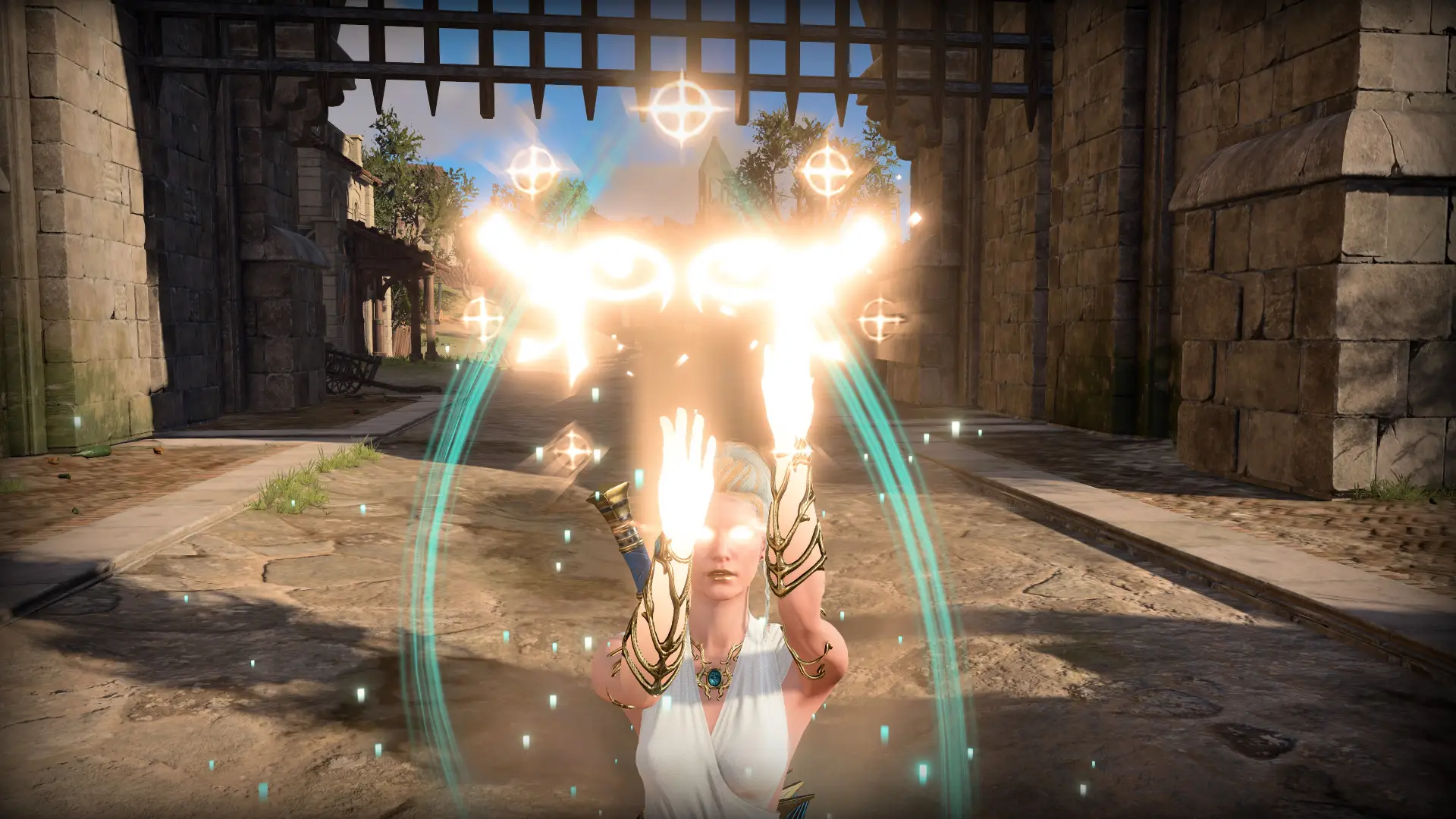
(Most important Abilities are bolded)
Cleric Build Levelling Guide – Baldur’s Gate 3
In this section, we have provided a step-by-step guide for levelling up your Cleric, including recommendations at each level for any choices that need to be made, such as Spell and Feat selection. We have broken it down into smaller sections to make it easier to keep track of where you are, starting with the early game levelling (Levels 2-4).
Early Game Levelling Guide for the BG3 Cleric Build
Here are the first few levels explained.
Level 2 – Cleric Build BG3
At Level 2, you’ll gain a new Spell Slot for your Cleric Build in Baldur’s Gate 3, allowing you to cast an extra spell between Long Rests.
You’ll also unlock a special type of ability specific to the Cleric – Channel Divinity Actions.
Channel Divinity Actions have their own number of uses, separate from Spell Slots. To begin with, you only have one use, which can be replenished by either a Short or Long Rest.
With the Light Domain Cleric, you’ll unlock the following Channel Divinity Actions at Level 2:
- Turn Undead – Present your holy symbol and pray. Each undead that can see or hear you is Turned, and must spend its turns fleeing from you, until it takes damage.
- Radiance of the Dawn – Harness the sun’s divine power to dispel any magical darkness and deal (2d10 + Cleric Level) Radiant Damage to hostile creatures. On a successful save, targets still take half damage. Doesn’t affect creatures that have total cover from you.

Turn Undead is quite a niche Action that you won’t always have use for, but Radiance of the Dawn lets you deal decent damage to all enemies in the area. If you get a very good Damage Roll, then you’ll be dealing over 20 damage to all enemies who don’t perform a  Saving Throw. This is also great for activating our Radiant Orb equipment, which we’ll explain in the Equipment section of the guide.
Level 3 – Cleric Build BG3
At Level 3 for your BG3 Cleric Build you unlock another First Level Spell Slot, as well as two Second Level Spell Slots.
You should Prepare these two spells at this point:
- Aid – Heals your allies within 9 metres for 5HP, and also increases their maximum HP by 5, until the next Long Rest. Use this after every Long Rest to improve your party’s health. Later on, you can upcast the spell to increase the effect by 5HP per spell level.
- Hold Person – Hold a humanoid creature, making it unable to move and act. At the end of each turn, the creature can try to free itself with a Saving Throw. This is a Concentration Spell. Melee attacks against the stunned creature are guaranteed crits, so this is especially good when combined with a melee heavy hitter in your party, like Karlach, Laezel or any other Fighter/Barbarian/Paladin.

 Hold a humanoid creature, making it unable to move and act. At the end of each turn, the creature can try to free itself with a
 You’ll also unlock a couple of new Domain Spells, which are spells that the Cleric will always have prepared (i.e they automatically go on your action bar without needing to choose them).
- Flaming Sphere – Summon a flaming sphere that deals 2d6 Fire damage to nearby enemies and objects. It also sheds bright light in a 6 metre radius, and dim light for an additional 6 metres. On a successful save, enemy creatures still take half damage. Requires Concentration, and will continue damaging enemies close to the sphere each turn.
- Scorching Ray – Hurl three rays of fire. For each ray that hits, you deal 2d6 Fire damage. You can hurl the rays at one target or several. Later on, you can upcast the spell – each spell level will add another spell projectile. I often find this spell to be a bit disappointing, but when you get lucky and all of the Rays hit, it can do really good damage.


Flaming Sphere can be a useful AOE spell in tight areas or chokepoints, but Scorching Ray is more widely useful. You can aim all three of the fire rays at the same target, dealing up to 36 damage (on a perfect roll).
I also want to point out the  Prayer of Healing spell. This heals your entire party by a significant amount, but only outside combat. It’s especially useful on Tactician/Honour difficulty, where resting uses double the amount of supplies. Use it to heal your party when you’re out of Short Rests, but it feels too soon to take a Long Rest (because you have too many Spell Slots and action charges left, for example). Thanks to the Cleric’s ability to slot and unslot spells freely, you can do this whenever you want without needing to reserve a spot for it.
Finally, keep in mind that some of the First Level Spells you already knew can now be upcast to Second Level, improving their effects but consuming a second level spell slot instead.
Level 4 – Cleric Build Baldur’s Gate 3 for PC/PS5
As with all classes in Baldur’s Gate 3, at Level 4, you’ll need to choose a Feat for your Cleric Build. Feats are powerful passive effects for your character that can enable a specific build or simply boost your stats. We strongly recommend choosing Ability Improvement, which will give you two additional Ability Points. Put them both into Wisdom, which should allow you to reach 18 Wisdom, significantly improving your Spellcasting ability.
You’ll also gain another First Level and Second Level Spell Slot, and you’ll need to choose another Cantrip. We’ll pick up  Thaumaturgy, which occasionally is useful in dialogue checks.
You can slot two more spells now (one from levelling up, another from improving our Wisdom Modifier, you have to go into the spell menu to see the second slot). The following spells are great choices:
- Spiritual Weapon – Summon a spiritual weapon to help you in combat. The weapon can be controlled and deals Force Damage. This is good for dealing extra damage in the early-game, and it’s also good for distracting enemies when you’re outnumbered. Enemies will often waste their time attacking this instead of your party members. It only has 20 HP, but it is resistant to most damage, so it’s good for this purpose.
- Enhance Ability – Choose an ability and give yourself or an ally Advantage in all checks of that ability until you lose Concentration on the spell. This is a very powerful buff for both combat and non-combat situations, but it does prevent you from casting any other Concentration spells.


Mid Game Levelling Guide for the BG3 Cleric Build
We will now go over the mid-game portion of levelling up your Baldur’s Gate 3 Cleric. This section covers levels 5-8.
Level 5 – Cleric Build Baldur’s Gate 3
At Level 5, your Cleric’s Spellcasting ability further improves.
Firstly, the Turn Undead Action is now upgraded to  Destroy Undead, which will now deal
  Radiant Damage to undead who are
  Turned by the Action.
You can unlock another new spell. For this build, we really need as many sources of Radiant damage as possible, so we’ll be going with the  Spirit Guardians spell. This will surround your Cleric with an AoE that deals either Radiant or Necrotic Damage (you usually want to choose the Radiant version unless the enemy is resistant to Radiant damage or vulnerable to Necrotic damage). This AoE follows your character around, and any enemies who enter it will take damage every turn. In situations where there are lots of enemies in a fairly small area, you can use this spell, then run around and catch all of them in the AoE once per turn to deal lots of damage. Just watch out for Opportunist attacks if you do this.
Finally, you’ll unlock another two Domain Spells at Level 5:
- Daylight – Enchant an item to shine like the sun or summon a sphere of sunlight that dispels all darkness around it. This spell will be very useful in Act II.
- Fireball – Shoot a bright flame from your fingers that explodes upon contact, torching everything in the vicinity for 8d6 Fire Damage. On a successful save, targets still take half damage.

Fireball is another strong spell that has very high damage potential. It’s an AOE that can roll for up to 48 damage and deals a minimum of 8 damage. If you have a clear line of sight to a cluster of enemies, then this is a great option.
Level 6
At Level 6, the Cleric Build gains a couple of new features:
- An extra Channel Divinity Charge, allowing you to use two Channel Divinity Actions per Short/Long Rest.
- Another Third Level Spell Slot, giving you three in total.
- Prepare one more Spell.
- If you’re suffering from a lot of deaths, get Revivify, which lets to revive a party member without needing to use expensive Revivification Scrolls.
- Another option is Glyph of Warding for an AoE spell that can be cast in different damage types or put a cluster of enemies to sleep at once.
- If you’re suffering from a lot of deaths, get


Level 7
At Level 7, you unlock the following:
- One Fourth Level Spell Slot, and the ability to Prepare Fourth Level Spells.
- Two more Spells from your chosen Domain (always Prepared). The Light Domain Cleric gets:
- Guardian of Faith – Summons an immobile Guardian. On his turn, he attacks a nearby enemy for 20 Radiant Damage. Enemies who move or attack while within range of the Guardian are also attacked. Every time the Guardian attacks, he also deals 20 Radiant Damage to himself.
- Wall of Fire – Create a blazing wall of fire, burning anyone who dares stand too close for 5-40 Fire Damage. Requires Concentration to maintain.
- One more spot for a Prepared Spell. There aren’t many good new spells available here, but one that is useful is Freedom of Movement. It lets you cure an ally from a stun or slowing effect, and makes them immune for the duration of the spell.


Level 8
At Level 8, you unlock:
- Potent Spellcasting – Add your Wisdom modifier to damage you deal with Cantrips.
- Another Fourth Level Spell Slot, giving you two in total.
- Choose another Feat. We recommend picking up Ability Improvement and improving your Wisdom to 20. This will give you the best possible spellcasting rolls.
- You can slot two new spells here. The remaining fourth-level spells are quite poor in my opinion, so you can use this as an opportunity to slot more spells from lower levels that are still useful, like those we talked about at Level 4 and Level 6, for example. Later on, you can use some of these slots for higher-level spells if you want.
While your Cantrips still suffer from a fairly poor hit chance with Cleric, keep an eye out for opportunities where they’re likely to hit so you can use the new Potent Spellcasting buff.
Late-Game Levelling Guide for the BG3 Cleric Build
We will now cover the latter levels for this BG3 Cleric Build, levels 9-12. In this section, your Cleric will begin unlocking very powerful spells that can make them a huge asset to your party.
Level 9
At Level 9, your Cleric’s spellcasting continues to improve, as you can now access even more powerful spells. Here you’ll unlock:
- Another Fourth Level Spell Slot, giving you three in total.
- One Fifth Level Spell Slot, and the ability to prepare Fifth Level Spells.
- Two more Domain Spells from your subclass. Light Domain Cleric gets:
- Destructive Wave – Create a shockwave of either divine or malevolent thunder that damages nearby creatures and possibly knocks them prone. Choose from 5-30 Thunder and 5-30 Radiant or Necrotic Damage.
- Flame Strike – Make a pillar of divine fire roar down from the heavens like the wrath of affronted angels. Deals 5-30 Fire and 5-30 Radiant Damage, unless the target rolls a Dexterity Saving Throw.
- Prepare one more spell, plus another two more to replace Death Ward and Banishment from Level 8:
- Dispel Evil and Good – Allows you to dispel mind-controlling conditions ( Charmed, Frightened, Possessed). While active, Aberrations, Celestials, Elementals, Fiends, Fey and Undead have
 Disadvantage when attacking you.
 - Insect Plague – Locusts attack everyone within a 12 metre area, dealing 4-40 Piercing Damage, making the area Difficult Terrain, and imposing Disadvantage on Perception Checks. Damage is halved on targets that roll a Constitution Saving Throw. This is one of the best spells in the Cleric’s arsenal, and can turn a chokepoint into a deadly killzone that enemies will really struggle to penetrate. Especially useful in Act III due to the narrow streets and tunnels, which make chokepoint tactics especially good.
- Mass Cure Wounds – A good multi-target healing spell.


 Frightened,
  Possessed). While active, Aberrations, Celestials, Elementals, Fiends, Fey and Undead have
  Disadvantage when attacking you.
Level 10
At Level 10, the Cleric unlocks a unique single-use feature to invoke the aid of their god. You gain:
- Another Fifth Level Spell Slot, giving you two in total.
- Choose one more Cantrip. We already picked up the most important Cantrips, so you can choose whatever you like here.
- Divine Intervention – Once per character, invoke your god’s aid. When activating this, you can choose from:
- Sunder the Heretical – Deal 8-80 Radiant Damage to a group of enemies.
- Arm Thy Servant – Grants you a Legendary weapon.
- Opulent Revival – Resurrect fallen Companions with half health and restore nearby allies as if they had Long Rested.
- Golden Generosity – Provides a rich bounty of Potions and Camp Supplies.
- Prepare one more Spell. Greater Restoration is a good option – it allows you to cure a range of Conditions and debuffs from your allies.
 Divine Intervention
 Sunder the Heretical – Deal 8-80
  Arm Thy Servant – Grants you a Legendary weapon.
 Opulent Revival – Resurrect fallen Companions with half health and restore nearby allies as if they had Long Rested.
 Golden Generosity – Provides a rich bounty of Potions and Camp Supplies.
Divine Intervention is a potentially good passive for helping you out in a pinch. But beware that this can only be used once per character. There is no way to recharge the ability.
Level 11
At Level 11, you don’t gain any new class abilities, but you do get access to Sixth Level Spells, the most powerful tier of magic in Baldur’s Gate 3.
You’ll gain one Sixth Level Spell Slot, and as usual you’ll be able to prepare one more Spell.
I highly recommend the  Heroes’ Feast spell, which gives another strong defensive buff to your whole party to use alongside the
  Aid spell. It also adds some Camping Supplies to your inventory, which should put an end to any problems you have with having enough supplies for Long Rests. Use the spell after every Long Rest along with the upcast Aid spell – this will make your party much stronger.
Level 12
If you’ve reached this point, then you have finished levelling up your Cleric to max level. Congratulations!
At Level 12, you can choose one more Feat for your Cleric Build. Picking up  War Caster is a good idea, as it gives you
  Advantage on Concentration Checks. Since the Cleric often spends a lot of time in close proximity to enemies while also spellcasting, this is really helpful for making your Concentration Spells more resilient. As a bonus, War Caster also lets you zap enemies who get too close with lightning.
You can also choose one more Spell to prepare.  Planar Ally allows you to summon a powerful creature to fight alongside you, not only dealing good damage to enemies but also redirecting some enemy attacks toward your summoned creature rather than your party members.

Cleric Build Equipment for Baldur’s Gate 3
In this section, we will outline the best equipment recommendations for your Light Cleric. We have included both an early game and a late game section for equipment, so you can use this build no matter how far through the game you are.
Some of the items are quite expensive – you may be interested in our BG3 Infinite Gold Guide to help you afford them all.
Early-Game
Early-Game equipment is available in Act I and the earlier parts of Act II. It is generally less powerful than the late-game version of the build, however there are still some really handy items that you can find fairly early on in your BG3 playthrough.
You can check below the table for more detailed information about each item, including how to obtain them.
| Slot | Icon | Item | Effects | Location |
|---|---|---|---|---|
| Head |  |
Wapira’s Crown |
|
Reward from Zevlor for completing the Save the Refugees quest |
| Cloak |  |
Cloak of Protection |
|
Purchased from Quartermaster Talli in Last Light Inn |
| Chest |  |
Luminous Armour |
|
In an opulent chest in the Selunite Outpost. |
| Gloves |  |
Luminous Gloves |
|
Inside the Potter’s Chest in the Ruined Battlefield |
| Boots |  |
Vital Conduit Boots |
|
Sold by A’jak’nir Jeera in Crèche Y’llek |
| Necklace |  |
Pearl of Power Amulet |
|
Sold by Omeluum in the Myconid Colony |
| Ring 1 |  |
Coruscation Ring |
|
In a chest hidden in the cellar of Last Light Inn |
| Ring 2 |  |
Callous Glow Ring |
|
In an opulent chest in the vault room of the Gauntlet of Shar |
| Main Weapon |  |
The Blood of Lathander |
|
Found in the secret area in Rosymorn Monastery (see below) |
| Shield |  |
Shield of Devotion |
|
Sold by Quartermaster Talli in Last Light Inn |
| Second Weapon |  |
Spellthief |
|
Sold by Arron in the Druid Grove |
 Armour Class and
  Blinds Undead and Fiends (this light also means the Coruscation and Callous Glow rings will always trigger)
 Reaction to attempt to knock a melee attacker
  Prone
Prone
Wapira’s Crown
Whenever you heal another creature, you also gain 1d6 HP. This is a decent early game heal and it’s basically free. Even though the Light Domain Cleric isn’t focused on healing, it can still make for a decent healer when needed, so this item is a good fit. You get Wapira’s Crown as a reward from Zevlor for doing the Save the Refugees quest, provided you accept the monetary reward. It is inside the sack he gives you.
Luminous Armour
Luminous Armour applies a stack of Radiating Orb on nearby foes whenever you deal Radiant damage. Radiating Orb is a debuff that reduces enemy Attack Rolls by -1 per stack, up to a limit of -10. This can seriously hinder enemies, and we’ll be combining this with similar pieces of equipment to fully utilize this debuff. This item synergises extremely well with the Spirit Guardians spell, as long as there are multiple enemies around to hit.
You can find the Luminous Armour in an opulent chest in the Selunite Outpost in the Underdark (Act I). This is the fortified area that you arrive in when entering the Underdark via the Shattered Sanctum entrance.
Luminous Gloves
The Luminous Gloves allow you to apply a stack of Radiating Orb to your target when you hit them with Radiant Damage. They are found inside the Potter’s Chest in the Ruined Battlefield area of Act II.
This isn’t as good at stacking up Radiating Orb as the Luminous Armour, but it is still useful and I strongly recommend using them both.
Vital Conduit Boots
The Vital Conduit Boots give you 8 Temporary HP whenever you cast a spell that requires Concentration. The Cleric has many such spells, so these boots are a really good fit. They are sold by A’jak’nir Jeera in Crèche Y’llek at the end of Act I. To find this area, you need to take the Mountain Pass route to Act II and explore the Rosymorn Monastery.
Cloak of Protection
The Cloak of Protection is a simple defensive item that gives you a +1 bonus to your Saving Throw rolls and your Armour Class, making you a little more resistant to a variety of attacks and hostile effects. It is sold by Quartermaster Talli in Last Light Inn, in Act II.
Pearl of Power Amulet
The Pearl of Power Amulet lets you restore a spell slot of first, second or third level, once per Long Rest. This is particularly handy in the early game when you don’t have a huge number of spell slots available. It is sold by Omeluum in the Myconid Colony, in the Underdark. To trade with them, you must first finish their quest to help them investigate the parasite.
Coruscation Ring
The Coruscation Ring is another item that is used to stack up the Radiating Orb debuff. Unlike the Luminous items mentioned above, it doesn’t strictly require Radiant Damage (but you should still use Radiant damage as much as possible, as this will trigger all of the Radiating Orb items). This ring will apply 2 turns of the debuff to your target when you hit them with any spell or cantrip damage, provided you are fully or partially illuminated by a light source.
The Coruscation Ring is fairly well-hidden. To find it, you need to gain access to the cellar of Last Light Inn in Act II. There is a set of double doors that are blocked by a spider web and some crates. Beyond those doors, you can find a cracked wall, which must be broken down. After that, you are looking for a chest containing the item.
Callous Glow Ring
The Callous Glow Ring triggers in a similar manner to the Coruscation Ring. When you deal damage to your target, and the target is fully or partially illuminated by a light source, your attack deals 2 bonus Radiant Damage. This Radiant Damage will then activate the Radiating Orb debuff on the Coruscation Ring, Luminous Armour and Luminous Gloves, in addition to any activations that already happened due to the primary damage. This lets you build up Radiating Orb stacks really quickly.
The Callous Glow Ring can be found in an opulent chest in the vault room of the Gauntlet of Shar, near Balthazar in Act 2.
The Blood of Lathander
A legendary mace with a +3 bonus to its Attack Rolls and Damage, The Blood of Lathander will also heal you when you reach 0 HP, once per Long Rest, and lets you cast a weaker version of the Sunbeam spell, which can be a big help in Act II for dealing very high damage to groups of shadow-cursed undead enemies, and triggering lots of stacks of Radiating Orb.
The light emitted by this weapon means that you can always trigger the effects of Coruscation Ring and Callous Glow Ring, even in dark areas.
Obtaining the Mace requires you to fully explore the Rosymorn Monastery and enter the secret area by solving the statue puzzle, near where you meet Vlaakith’s projection. It is protected by a trap, which you can either disable by collecting the Ceremonial Weapons found in the Monastery, or you can take it without disabling the trap, in which case you should ensure the character who grabs it has a self-teleport ability like Misty Step, and give everyone a Potion of Speed to make sure they can escape from the Monastery in time.
Shield of Devotion
A good early-to-mid-game shield, the Shield of Devotion grants you an extra level 1 Spell Slot and lets you use your Reaction to try to knock over an enemy who hit you with a melee attack. It also grants you a unique version of the Aid spell, however this version only casts on you and not on your team, and it will not stack with the normal version. Be careful when using this, as it will replace the buff you have from the normal version of Aid.
The Shield of Devotion is sold by Quartermaster Talli in Last Light Inn, in Act II.
Spellthief
A handy Longbow for an early-game spellcaster, Spellthief can restore a Level 1 Spell Slot once per Long Rest, by landing a Critical Hit with the weapon. It is sold by Arron in the Druid Grove.
If you don’t have Proficiency with Longbows then you can substitute this for a different ranged weapon that’s more suited to your character.
Late-Game
Late-Game Equipment is found in Act III and the latter parts of Act II, however some items from the early-game may also find their way onto this list, if they are powerful enough to remain competitive with items found in the latter parts of the game.
At this stage of the game we are mainly focusing on finding items that improve our Spell Save Difficulty Class – increasing this stat means that enemies need to roll a higher number to succeed a Saving Throw against our spells.
However most items that improve this stat are fairly light on the defensive side, therefore we have included a couple of optional items that you can use instead if you’re struggling to stay alive with the optimal setup.
| Slot | Icon | Item | Effects | Location |
|---|---|---|---|---|
| Head |  |
Hood of the Weave |
|
Sold by Mystic Carrion in Philgrave’s Mansion |
| Cloak |  |
Cloak of the Weave |
|
Sold by Helsik at the Devil’s Fee, once her special stock has been unlocked. |
| Chest | |
Luminous Armour |
|
In an opulent chest in the Selunite Outpost. |
| Gloves | |
Luminous Gloves |
|
Inside the Potter’s Chest in the Ruined Battlefield |
| Boots |  |
Helldusk Boots |
|
In a locked Gilded Chest on the top floor of Wyrm’s Rock Fortress |
| Necklace |  |
Amulet of Greater Health |
|
Take from a trapped pedestal in the Archive of the House of Hope |
| Ring 1 | |
Coruscation Ring |
|
In a chest hidden in the cellar of Last Light Inn |
| Ring 2 | |
Callous Glow Ring |
|
In an opulent chest in the vault room of the Gauntlet of Shar |
| Main Weapon | |
The Blood of Lathander |
|
Found in the secret area in Rosymorn Monastery (see below) |
| Shield |  |
Viconia’s Walking Fortress |
|
Looted from Viconia DeVir in the Cloister of Sombre Embrace |
| Second Weapon | |
The Dead Shot |
|
Sold by Fytz the Firecracker in Stormshore Armoury |
Hood of the Weave
The Hood of the Weave grants a +2 bonus to your Spell Save DC and Spell Attack Rolls, making all of your spells more likely to succeed at damaging or applying a condition to their target. It is sold by Mystic Carrion in Philgrave’s Mansion in Act III.
Helldusk Gloves
The Helldusk Gloves are important because they give another +1 bonus to Spell Save DC and Spell Attack Rolls. Your weapon attacks will also do 1d6 extra Fire Damage with these gloves equipped. They are dropped by Haarlep in the House of Hope.
Helldusk Boots
With the Helldusk Boots equipped, you cannot be forcibly moved by hostile spells or actions, and you are immune to being slowed down by Difficult Terrain. You can also use your Reaction to automatically succeed a failed Saving Throw. These effects are especially good for your Light Domain Cleric, as they are very likely to be the spellcasting core of your party, and the Helldusk Boots will make it much harder for enemies to prevent you from casting spells.
The Helldusk Boots can be found in a locked Gilded Chest on the top floor of Wyrm’s Rock Fortress. Take the boots before Gortash’s Coronation to avoid making nearby NPCs hostile.
Cloak of the Weave
The Cloak of the Weave gives you another +1 bonus to Spell Save DC and Spell Attack Rolls, making it even harder for enemies to resist the effects of your spells. Once per Short Rest, you can absorb half of the next elemental attack that targets you, and imbue your next outgoing attack with 1d6 of the same element.
The Cloak of the Weave is sold by Helsik at the Devil’s Fee, once her special stock has been unlocked.
Amulet of Greater Health
The Amulet of Greater Health improves your Constitution to 23, which will have the side effect of considerably improving your max HP, too. You also get Advantage on Constitution Saving Throws. All of this significantly boost your HP, and also makes it easier to succeed Concentration Saving Throws.
Can be stolen from a trapped pedestal in the Archive of the House of Hope.
Viconia’s Walking Fortress
The strongest shield in the game, Viconia’s Walking Fortress gives you a +3 boost to Armour Class, lets you knock over your melee assailants and deal Force Damage to them (using a Reaction), gives you Advantage on Saving Throws against Spells, gives all enemy Spell Attack Rolls against you Disadvantage, gives you access to the Warding Bond spell and the Reflective Shell action.
This shield is looted from Viconia DeVir in the Cloister of Sombre Embrace, in Act III.
The Dead Shot
The Dead Shot reduces the Attack Roll number needed to crit with the bow by 1, and doubles your Proficiency Bonus when attacking with the bow (effectively improving your accuracy). It is sold by Fytz the Firecracker in Stormshore Armoury, Lower City.

Cleric Build Extra Info
Below is some additional info that will help you to get the most out of this Baldur’s Gate 3 Cleric Build.
BG3 Cleric How to Play
Here is a more detailed explanation of how to play our Light Domain Cleric Build.
Early-Game Light Domain BG3 Strategy
Clerics can struggle in the first few levels of BG3, because their attacks tend to be rather weak early on, and they don’t have many reliable damage options from spells and cantrips either.  Inflict Wounds is your best damage source early in the game, but it often has a low hit chance.
To counteract these problems:
- I recommend being especially careful with your Actions early in the game so you don’t waste turns.
- Attack when there are good opportunities, but otherwise, you are best off focusing on supporting and healing allies and debuffing enemies.
- Once you obtain some of the Radiating Orb equipment (like the Luminous Armour and Gloves), you can start debuffing enemies quite easily, especially when you combine this with the Light Domain’s Radiance of the Dawn action, which deals strong Radiant Damage in a large AOE and can apply many stacks of Radiating Orb to nearby enemies.
This state of affairs lasts until you reach Level 5, at which point you’ll begin unlocking some much better spells.
Mid-Game Light Domain BG3 Strategy
In the Mid-Game, the Light Domain Cleric is much stronger, with a more useful range of spells and abilities. If you obtain the recommended Radiating Orb equipment, your Cleric will quickly become a debuff machine.
- Spirit Guardians is especially good, because many enemies in Act II are weak to Radiant Damage.
- Despite the stronger spells, in many fights you’ll still be best off with supporting allies for now, since we’re still lacking the late-game Cleric spells.
- If you’ve been collecting the recommended equipment, then by now you should be able to put crippling debuffs on enemies with Radiating Orb, even making boss enemies greatly struggle to hit you.
- You have good AOE damage potential from spells like Spirit Guardians, Glyph of Warding and Fireball. Utilize these, but be wary of Concentration checks.
Important: Keep looking for ways to activate the  Radiating Orb equipment – I can’t stress enough how strong the debuff is.
Late-Game Light Domain BG3 Strategy
Once you reach level 9 and above, you’ll start unlocking spells like Insect Plague and  Flame Strike.
- Insect Plague is the best offensive spell in the Cleric’s arsenal, as it puts a massive movement speed debuff on anyone caught within and deals up to 40 Piercing Damage per turn. It works amazingly well in chokepoints where enemies cannot find another way to reach you. Act III’s urban setting has a lot of chokepoints and narrow spaces, making this spell ideal. Dropping it on top of a cluster of enemies can also be really strong, even if they’re not in a chokepoint. The Movement Speed malus means they’ll probably have to waste a whole turn escaping from the AoE.
- If you want a larger burst of damage immediately, you’re usually better off using Flame Strike instead.
- For maximum single-target damage, upcast Inflict Wounds to Spell Level 4 or 5. This old level 1 spell scales really well when upcast, and can crit in excess of 100 damage if you’re lucky.
- Make sure to keep buffing your party’s HP by upcasting Aid after every Long Rest, and when you hit Level 11, you can also add Heroes’ Feast to this routine. This makes your party much stronger.

Mirror of Loss
If you successfully acquire a buff from the Mirror of Loss during your playthrough, you should put the extra points into Wisdom. This will improve your spellcasting.
If you don’t know what the Mirror of Loss is or how to use it, you may be interested in our Mirror of Loss Guide. The Mirror can give up to three additional Ability Points to all members of your party, making it very strong.
Cleric Build Illithid Powers (optional)
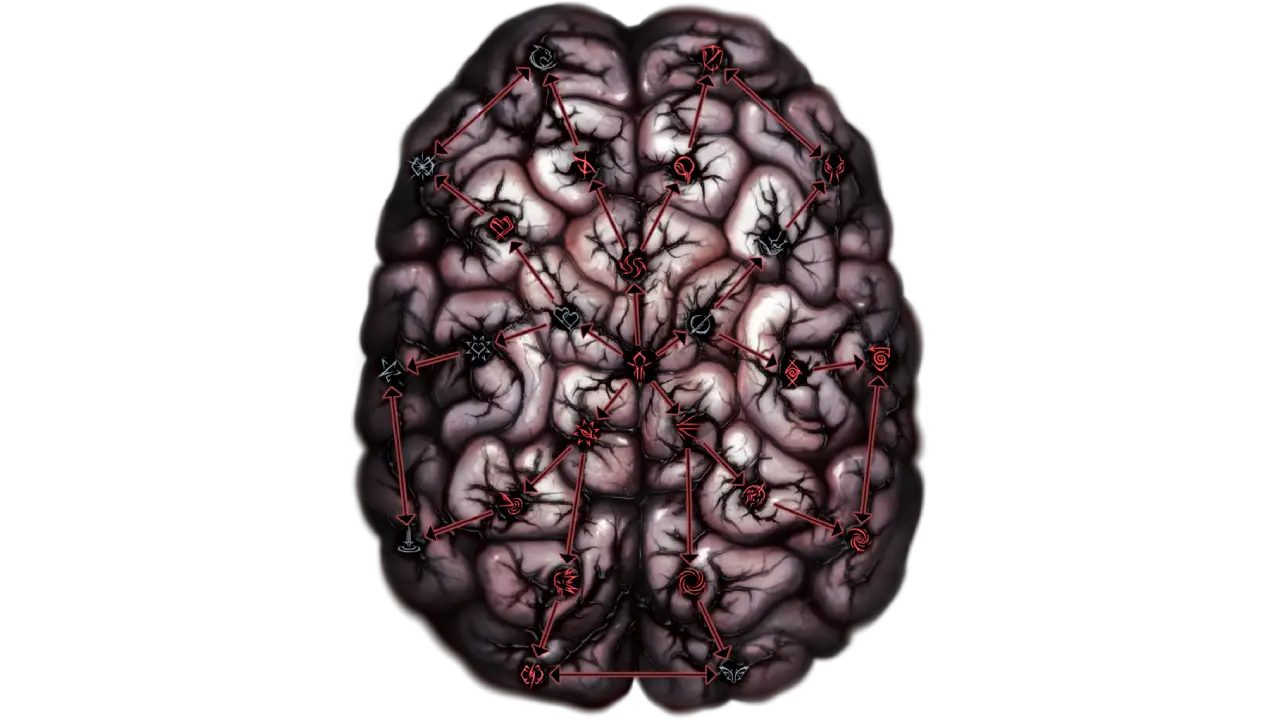
Illithid Powers are unlocked later in BG3 when you learn more about Mind Flayers and Tadpoles. By eating Jars of Mind Flayer Parasites you gain one point. This is another optional skill tree that you can get access to if you want. Here are some of the best Illithid Powers for the BG3 Cleric Build with the Light Domain subclass:
- Concentrated Blast: Allows you to deal extra damage to a target when you are Concentrating on a spell, potentially also healing if the target is Concentrating too.
- Cull the Weak: When you reduce a creature’s hit points below a certain threshold, this power instantly kills it and deals 1-4 Psychic Damage to nearby enemies. This is particularly effective when engaging groups of weaker foes, enabling you to thin their numbers rapidly. You have quite a few AoE spells, which are pretty good at activating this effect.
- Fly: This can be used to reach hard to get to places or change positions in combat.
- Black Hole: This power creates an area-based effect that pulls in and slows targets. It’s particularly useful for crowd control, allowing you to cluster enemies together for area-of-effect attacks or to isolate them from vulnerable allies.
- Psionic Backlash: This is a top-tier Reaction from the Illithid Powers skill tree in BG3. This allows you to deal Psychic Damage when a nearby enemy casts a spell. This is especially useful if the target is casting a Concentration Spell. The damage from Psionic Backlash can immediately break their Concentration, ending the spell’s effects.


Other Baldur’s Gate 3 Builds
- Druid Build – Circle of the Moon
- Bard Build – College of Lore
- Ranger Build – Hunter
- Monk Build – Way of Shadow
- Monk Build – Way of the Four Elements
- Monk Build – Way of the Open Hand
- Necromancer Build – Necromancy
- Fighter Build – Battle Master
- Barbarian Build – Berserker
- Warlock Build – Great Old One
- Cleric Build – Light Domain
- Rogue Build – Thief
- Sorcerer Build – Wild Magic
- Wizard Build – Evocation School
- Paladin – Oath of Ancients
- More Baldur’s Gate Guides & Builds
If you want to check out the map of Baldur’s Gate 3, please visit the Baldur’s Gate 3 Interactive Map.