


Welcome to the best BG3 Death Domain Cleric Build. For this Cleric build we’ll be using the Death Domain subclass of the Cleric.
For more Cleric builds, visit our BG3 Cleric Builds page or explore the complete BG3 Builds Database. We also have a powerful BG3 Shadowheart Build. You can also check out our BG3 Builds Tier List to see which builds perform best.
Death Domain Clerics gain extra necromancy spells, and can explode nearby corpses to deal damage to nearby enemies.
Death Domain Cleric Build Table of Contents:
- Death Domain Build Overview
- Death Cleric Character Creation
- Death Cleric Build Levelling Progression
- Death Cleric Equipment
- Death Cleric Build Extras and Tips & Tricks
A quick look at the main strengths and weaknesses of the Death Domain Cleric in Baldur’s Gate 3:
Death Cleric Strengths
Death Cleric Weaknesses
BG3 Death Domain Cleric Build Overview
In this section, we will summarise the most important aspects of the Cleric class and Death Domain subclass, which we are using for this build. If you’re already familiar with how these work, please skip this section.
Cleric Class Overview
The Cleric class is a powerful spellcaster who has some proficiency with weapons. They have access to a wide array of buff, debuff and healing spells, making them one of the best classes in the game for party support. At high levels, they are also good damage dealers thanks to their powerful magic. But in the early game, Clerics aren’t very good at dealing damage and are better off focusing on supporting allies.
Here are the most important aspects of the Cleric Class in BG3:
 Channel Divinity (Level 2) – This is the Cleric’s unique class resource. You will start with one Channel Divinity charge, which is replenished on a Short or Long Rest. You’ll unlock more charges later. These charges are consumed to power unique Cleric Actions, some of which are strong enough to turn the tide of battle. The Cleric Actions you can use depend on your chosen subclass.
- Channel Divinity: Turn Undead (Level 2) – Use a Channel Divinity charge to Turn all nearby undead, forcing them to flee.
- Destroy Undead (Level 5) – An upgrade for Turn Undead. Undead who are Turned will also take 4d6 Radiant Damage.
- Divine Intervention (Level 10) – Call on your deity to grant you a powerful one-time boon. Can either deal massive AoE damage, resurrect and heal all nearby companions, spawn a generous helping of Camping Supplies and Potions, or summon a Legendary Devotee’s Mace that can deal bonus Radiant Damage and heal nearby allies. You can only use this Action once, but if you choose the Mace, you can keep it forever.
 Channel Divinity (Level 2) – This is the Cleric’s unique class resource. You will start with one Channel Divinity charge, which is replenished on a Short or Long Rest. You’ll unlock more charges later. These charges are consumed to power unique Cleric Actions, some of which are strong enough to turn the tide of battle. The Cleric Actions you can use depend on your chosen subclass.
 Channel Divinity: Turn Undead (Level 2) – Use a Channel Divinity charge to
  Turn all nearby undead, forcing them to flee.
 Destroy Undead (Level 5) – An upgrade for Turn Undead. Undead who are
 Divine Intervention (Level 10) – Call on your deity to grant you a powerful one-time boon. Can either deal massive AoE damage, resurrect and heal all nearby companions, spawn a generous helping of Camping Supplies and Potions, or summon a Legendary Devotee’s Mace that can deal bonus Radiant Damage and heal nearby allies. You can only use this Action once, but if you choose the Mace, you can keep it forever.
Clerics can also use a wide range of spells, which we will detail in the build guide below.
Death Domain Subclass Overview
Here are the Death Domain Cleric’s defining features:
- Martial Weapons Proficiency (Level 1) – Allows you to effectively wield any Martial weapon in the game
- Reaper (Level 1) – Your Necromancy Cantrips that usually target one creature can now target two.
- Channel Divinity: Touch of Death (Level 2) – When you hit a creature with a melee attack, you can spend a Channel Divinity charge to deal bonus Necrotic Damage.
- Inescapable Destruction (Level 6) – You ignore enemy Resistance to Necrotic Damage.
- Divine Strike: Necrotic (Level 8) – Once per turn, your weapon deals 1d8 bonus Necrotic Damage.
 Martial Weapons Proficiency (Level 1) – Allows you to effectively wield any Martial weapon in the game
 Reaper (Level 1) – Your Necromancy Cantrips that usually target one creature can now target two.
 Channel Divinity: Touch of Death (Level 2) – When you hit a creature with a melee attack, you can spend a Channel Divinity charge to deal bonus
 Inescapable Destruction (Level 6) – You ignore enemy Resistance to
  Divine Strike: Necrotic (Level 8) – Once per turn, your weapon deals 1d8 bonus
 In addition to these effects, the Death Cleric will unlock a range of Domain Spells themed around necromancy and necrotic attacks. Unlike other spells, Domain Spells do not need to be prepared and are always available on your action bar.
You may want to enhance your Death Domain Cleric by getting the Necromancy of Thay book, which can eventually unlock the Dans Macabre spell, allowing you to summon four Ghouls once per Long Rest. This is optional, but if you want to do it, then see our Necromancy of Thay guide for detailed explanations of where to find the book, how to open it and how to unlock its full potential and unlock the spell.
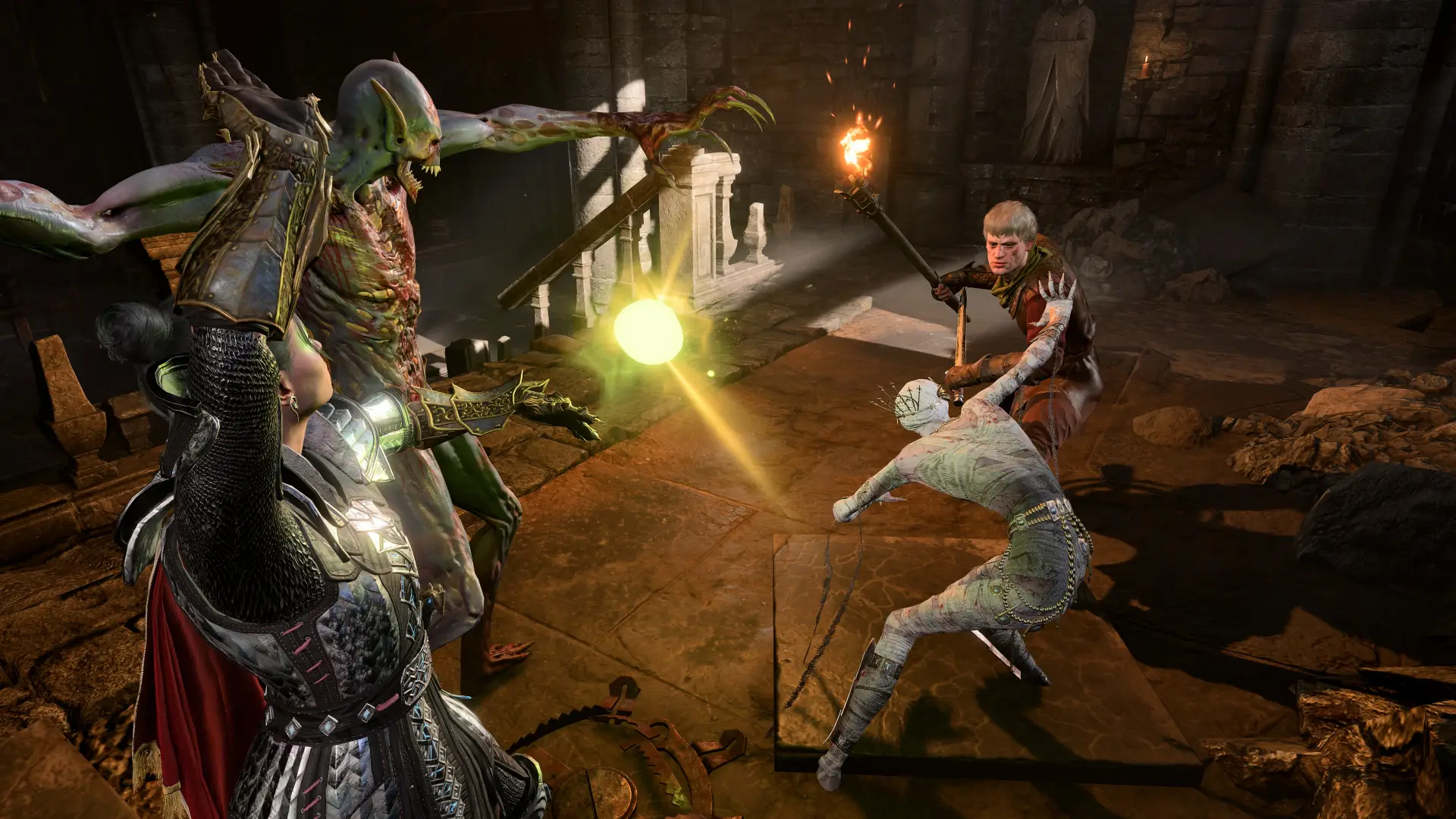
Character Creation (Level 1) – BG3 Death Domain Build
In this section, we will guide you through which options to choose in Character Creation for your BG3 Death Cleric Build.
Important: You also already have to select your Subclass at level 1; this can be easily overlooked because the game pushes you directly to the main class and then just selects the first option in the subclass menu. Therefore, ensure you have selected the Death Domain subclass.
Death Domain Cleric Top 5 Races
You can use this build with any race and it will work fine. However, some are slightly better than others. These are our top 5 picks for the best Death Domain Cleric race:
| Race | Strengths | Info |
|---|---|---|

Wood Elf |
|
Wood Elves are a great choice for most build types in BG3, thanks to their superior movement speed. Natural Proficiency in Perception is always useful, and immunity to magical Sleep will help you out a lot, especially in the early game, where enemy mages love to spam this spell.
You can also use a Half Wood-Elf for most of the same benefits. |

Duergar |
|
With their wide choice of armour and weapon proficiencies, and resistances to poison, charm, and paralysis, Duergar are one of the strongest races in BG3.
The only downside of Duergar is their small stature – this reduces their base Movement Speed to 7.5 metres per turn (most races get 9 metres). |

Drow, either type |
|
Very similar bonuses to the Wood Elf, but lacking the extra Movement Speed. Drow do have Superior Darkvision, so seeing in the dark is rarely an issue for them. |
|
Gnome, any type |
|
Gnomes gain Advantage on Intelligence, Wisdom and Charisma Saving Throws, a strong bonus which shouldn’t be underestimated.
The difference between the Forest, Deep and Rock Gnomes is quite small and largely comes down to personal preference. I think the Deep Gnome is technically the best choice thanks to their Superior Darkvision, but the other two are fine. Like the Duergar, Gnomes are of short stature, so they have reduced Movement Speed. |
|
Zariel Tiefling |
|
You gain Fire Resistance and 12 metres of Darkvision. You unlock Searing Smite and Branding Smite at levels 3 and 5, respectively.
This makes for a nice combo with the Death Cleric’s innate ability to infuse melee Attack Rolls with Necrotic Damage; even with a fairly weak melee weapon, you can deal big boosts of damage, which will be very helpful in the earlier parts of the game. |
 Stealth and
  Perception
 Shortswords
 Longswords
 Shortbows
 Fey Ancestry
 Advantage against
  Charmed
 Magical Sleep
 Darkvision
 Fleet of Foot
 Medium Armour
 Dwarven Resilience
 Poisoned
 Superior Darkvision
 Duergar Resilience
 Saving Throws against illusions
 Paralysed
 Enlarge
 Invisibility
 Drow Magic
 Dancing Lights
 Faerie Fire
 Darkness




Skills & Background
The Death Domain Cleric Build will be focused on the Wisdom and Dexterity Abilities, so we’ll choose a Background and Skills that align with this as much as possible to play to our strengths.
For our Background, we’re using Folk Hero, which gives the following two Skill Proficiencies:
- Animal Handling (WIS) – Usually used in dialogue checks, helps you to tame and calm animals.
- Survival (WIS) – Makes you more likely to spot hidden treasure and supplies in the wild. They are usually in buried stashes that need to be dug up with a shovel.
 Animal Handling
 Survival
You can choose two more Skills from the Cleric Skill list to be Proficient with. We went with the following options:
- Insight (WIS) – You are better at reading the behaviour of NPCs. This can unlock special dialogue options.
- Medicine (WIS) – Usually used in dialogue checks. Allows you to recognise symptoms and sometimes treat NPCs who are injured or sick, unlocking additional dialogue options.
 Insight
 Medicine
If you are a Human, you can also choose one additional Skill to be Proficient with. This choice is unrestricted. I would suggest applying it to  Acrobatics, a Dexterity Skill, which will help you to resist being pushed by enemies. But it is up to you.
Abilities
The Death Domain Cleric can be built to focus on melee weapons, but we do not favour this approach because you don’t get access to Extra Attack, so your weapon damage output is always quite limited. Therefore we’ll be building with a one-handed weapon and Shield for increased defensive stats, and we’ll use Cantrips and Spells as much as possible for damage and support. Some spells use melee attack rolls, which still allow us to take advantage of the Death Domain Cleric’s extra melee damage, without having to rely much on melee weapons.
With this in mind, we’ll be building into Wisdom, Constitution and Dexterity:
- 10 Strength
- 14 Dexterity
- 16 Constitution
- 8 Intelligence
- 16 Wisdom
- 10 Charisma
 10 Strength
 14 Dexterity
 16 Constitution
 8 Intelligence
 16 Wisdom
 10 Charisma
Bolded Abilities are essential for the build. The others can be tweaked if you want. Please note that we’ll be using Medium Armour for this Death Domain Cleric build, so you should not increase Dexterity above 14. The Dexterity Bonus for Medium Armour is limited to +2 Armour Class, which is achieved by a Dexterity score of 14. Any additional investment in Dexterity is a waste of points for this build.
Cantrips
In the Class menu, you need to choose three Cantrips to start the game with. We recommend getting the following Cantrips:
- Guidance – This is a great ability for out-of-combat situations and can be cast either on yourself or on an active ally from within the dice roll screen, letting you gain a +4 Advantage on whatever it is you are doing.
- Toll the Dead – Deals 1d8 Necrotic Damage at long range, unless the enemy rolls a successful Wisdom Save. The damage is increased to 1d12 against enemies who are below full health. The damage will scale up by adding dice at Levels 5 and 10.
- Bursting Sinew – Target a corpse and cause it to explode, dealing 1d10 Piercing Damage to nearby enemies who fail the Dexterity Saving Throw. The damage increases at levels 5 and 10. This is not quite as effective as Corpse Explosion in Larian’s previous title, Divinity: Original Sin 2, but it’s still a great Cantrip when used correctly.


Spells
You’ll need to choose four Spells to prepare, from a list of 10 known Spells. We recommend choosing the following Spells:
- Guiding Bolt – A strong ranged projectile that deals up to 24 Radiant Damage and gives the next person to attack the target
 Advantage.
 - Healing Word – Useful for healing yourself or your allies. At first glance, you might wonder why we chose this instead of Cure Wounds, which has a higher potential healing value. That’s because this skill can be cast at long range, while Cure Wounds needs you to be in arm’s reach of the target, which just isn’t going to cut it. A good healing spell needs to be easy to use in all situations, and that’s what Healing Word gives you.
- Bless – Target up to three Allies, giving them a buff on
 Attack Rolls and Saving Throws. This improves the attack and defense of your allies, which can be really handy. Note that this is a Concentration Spell, so casting it will break any other Concentration effect you have active. Use this when fighting early-game boss enemies like the Gnolls on Risen Road – it’s going to help a lot while you’re stuck with weak early-game weapons.
 - Inflict Wounds – Deals up to 30 Necrotic damage to an enemy. It can be upcast for more damage later in the game. The problem with this spell is that it only works in melee range. But it can hit really hard. Only use it when the hit chance is decent (at least 70%), otherwise it becomes another Sacred Flame situation.

 Cure Wounds
 Attack Rolls and
 Death Domain Features
The Death Domain Cleric starts the game with the following extras immediately available:
- Martial Weapons Proficiency – Gives Proficiency with all Martial (Strength-based) weapons. We won’t be making much use of this for our build, though, because the Death Domain Cleric doesn’t lend itself too well to melee weapon combat.
- Reaper – Your Necromancy Cantrips that usually target one creature can now target two creatures.
- Domain Spells – You gain access to the following spells, which are always Prepared:
- Bone Chill – Deal Necrotic Damage at long range, and prevent the target from healing for 1 turn. More effective against Undead targets.
- False Life – Give yourself 7 Temporary HP. I personally think this is the worst spell in the game, and I literally never use it. But it comes with the Death Domain subclass regardless.
- Ray of Sickness – Deals 2d8 Poison Damage as a ranged Attack Roll. If it hits, it also attempts to apply Poisoned to the target, imposing
 Disadvantage on Attack Rolls and Ability Checks for 2 turns.


 Disadvantage on Attack Rolls and Ability Checks for 2 turns.
This is a pretty decent haul of stuff immediately available from the start of the game, and there’s more to come soon.

Death Domain Cleric Levelling Guide
In this section, we have provided a step-by-step guide for levelling up your Cleric, including recommendations at each level for any choices that need to be made, such as Spell and Feat selection.
Early-Game Levelling Guide – BG3 Death Cleric
We’ll start with the early-game levelling process, at Levels 2-4.
Level 2 – Death Cleric Build BG3 for PC/PS5
At Level 2, you’ll gain a new Spell Slot for your Death Cleric Build in Baldur’s Gate 3, allowing you to cast an extra spell between Long Rests.
You’ll also unlock a special type of ability specific to the Cleric – Channel Divinity Actions.
Channel Divinity Actions have their own number of uses, separate from Spell Slots. To begin with, you only have one use, which can be replenished by either a Short or Long Rest.
With the Death Domain Cleric, you’ll unlock the following Channel Divinity Action at Level 2:
- Turn Undead – This is available to all Clerics, regardless of subclass. It attempts to Turn all Undead who can see you, causing them to flee.
- Touch of Death – This is unique to the Death Domain Cleric. When you hit a creature with a melee attack (including melee spell Attack Rolls like Inflict Wounds) you can spend a Channel Divinity charge to deal Necrotic Damage. The amount of damage is calculated by the formula 5 + 2*(Cleric Level). So, to begin with, this will deal 9 damage, increasing by 2 at every level.
Tip: Ensure your Reactions are correctly set up to ask you when you want to activate Touch of Death.
Level 3 – Death Cleric Build BG3
At Level 3 for your Death Cleric Build, you unlock another First Level Spell Slot, as well as two Second Level Spell Slots.
There are a couple of Second Level Spells that would be great to prepare at this point:
- Aid – Heals your allies within 9 metres for 5HP, and also increases their maximum HP by 5, until the next Long Rest. Use this after every Long Rest to improve your party’s health. Later on, you can upcast the spell to increase the effect by 5HP per spell level.
- Hold Person – Hold a humanoid creature, making it unable to move and act. At the end of each turn, the creature can try to free itself with a Saving Throw. This is a Concentration Spell. Melee attacks against the stunned creature are guaranteed crits, so this is especially good when combined with a melee heavy hitter in your party, like Karlach, Laezel or any other Fighter/Barbarian/Paladin.
 Hold a humanoid creature, making it unable to move and act. At the end of each turn, the creature can try to free itself with a
 You’ll also unlock a couple of new Death Domain Spells, which are spells that the Cleric will always have prepared (i.e they automatically go on your action bar without needing to choose them):
- Blindness – Blind a creature for up to 10 turns, limiting their attack range to 3 metres, imposing Disadvantage on their Attack Rolls and Advantage on all Attack Rolls against them. They can try to resist the effect with a Constitution Save.
- Ray of Enfeeblement – Sap a creature’s Strength, halving their damage with Strength weapons. Requires Concentration to maintain, and they can make a Constitution Save each turn to try to resist the effect.


Also, keep in mind that some of the First Level Spells you already knew can now be upcast to Second Level, improving their effects but consuming a second-level spell slot instead.
Level 4 – Death Cleric Build Baldur’s Gate 3 for PC/PS5
As with all classes in Baldur’s Gate 3, at Level 4 you’ll need to choose a Feat for your Death Cleric Build. Feats are powerful passive effects for your character that can enable a specific build or simply boost your stats. We strongly recommend choosing Ability Improvement, which will give you two additional Ability Points. Put them both into Wisdom, which should allow you to reach 18 Wisdom, improving your Spellcasting ability.
You’ll also gain another First Level and Second Level Spell Slot, and you’ll need to choose another Cantrip. We’ll pick up  Thaumaturgy, which occasionally is useful in dialogue checks.
Finally, we need to choose two more spells at this point. We recommend:
- Prayer of Healing – Heals all visible allies within 9 metres by 2d8 HP. This is particularly useful when your entire party is damaged and needs healing. It can only be used outside of combat, so when it’s not needed, you can unprepare it and replace it with any other spell from the Cleric’s arsenal (perhaps Enhance Ability).
- Spiritual Weapon – Summon a spiritual weapon to help you in combat. The weapon can be controlled and deals Force Damage. This is good for dealing extra damage in the early-game, and it’s also good for distracting enemies when you’re outnumbered. Enemies will often waste their time attacking this instead of your party members. It only has 20 HP, but it is resistant to most damage, so it’s good for this purpose.


Mid-Game Death Domain Cleric Levelling Guide
We’ll now go through the mid-game levels, 5-8.
Level 5 – Death Cleric Build Baldur’s Gate 3
At Level 5, your Death Cleric’s Spellcasting ability further improves.
You’ll unlock two Third Level Spell Slots. While this build is quite flexible and it’s up to you which spells you choose here, we recommend taking a close look at the following options:
- Glyph of Warding – Inscribe a circle of arcane glyphs on the ground that trigger a magical effect when stepped on by an enemy. Only one glyph can be active at a time. Deals great AOE damage, and targets who perform a Saving Throw will still take half of the damage. You can place the glyph underneath an enemy to trigger it immediately. This can deal a lot of damage to your allies, so be careful when placing it!
- Revivify – Revive a companion. They return to life with 1 hit point. You no longer need to worry about carrying around a stack of Revivification Scrolls, as this spell has the same effect!

You’ll also unlock two more Death Domain Spells at Level 5:
- Animate Dead – Target a corpse to raise a Skeleton or a Zombie. Later on, you will be able to upcast this spell to raise more powerful undead, or packs of undead.
- Vampiric Touch – Deal 3d6 Necrotic Damage as a melee Attack Roll, and restore half of the damage done to yourself as HP. If you maintain Concentration, you can recast the effect every turn without spending another Spell Slot. This is another spell that can activate the Death Domain Cleric’s Touch of Death.


Level 6
At Level 6, the Death Cleric Build gains a couple of new features:
- An extra Channel Divinity Charge, allowing you to use two Channel Divinity Actions per Short/Long Rest.
- Inescapable Destruction – This passive allows you to ignore enemy Necrotic Resistance.
- Another Third Level Spell Slot, giving you three in total.
- Prepare one more Spell. We recommend:
- Spirit Guardians – Surround yourself with spirits who follow you around. The spirits attack any enemies who move close to you, dealing Radiant or Necrotic damage. The Radiant version of this spell is especially strong in Act II, as many of the enemies there are Vulnerable to damage of that type.
Level 7
At Level 7, you unlock the following:
- One Fourth Level Spell Slot, and the ability to Prepare Fourth Level Spells.
- Two more Spells from your chosen Domain (always Prepared). The Death Domain Cleric gets:
- Blight – A single-target spell that can deal heavy Necrotic Damage if you get a good roll. Targets who save still take half damage.
- Death Ward – Gives you or an ally a status that restores 1HP when their health reaches 0, preventing them from being Downed. I think this spell offers poor value, but you can use it if you want.
- Prepare one more Cleric spell of your choice. We recommend:
- Guardian of Faith – Summons an immobile Guardian. On his turn, he attacks a nearby enemy for 20 Radiant Damage. Enemies who move or attack while within range of the Guardian are also attacked. Every time the Guardian attacks, he also deals 20 Radiant Damage to himself.


 Downed. I think this spell offers poor value, but you can use it if you want.
Level 8
At Level 8 you unlock:
- Another Fourth Level Spell Slot, giving you two in total.
- Choose another Feat. Our best option here is to choose Ability Improvement again, and improve your Wisdom to 20.
- Choose two more spells. We recommend:
- Mass Healing Word – Heal all allies within 18 metres for 1d4 + your Wisdom Modifier.
- Freedom of Movement – Immediately snap an ally out of any stun, then give them immunity to Difficult Terrain and magical Paralysis and Restraint. Requires Concentration to maintain. This is a very useful spell to counter enemy crowd control, especially if you have a melee heavy-hitter in your party like a Fighter or Barbarian.
- Divine Strike: Necrotic – Once per turn, you can make a weapon attack (melee or ranged) that has 1d8 bonus Necrotic Damage added to its normal damage. This can also be activated as a post-attack Reaction (this won’t consume your Reaction). Unlike Touch of Death, this cannot be activated on melee spells and explicitly requires a weapon attack.


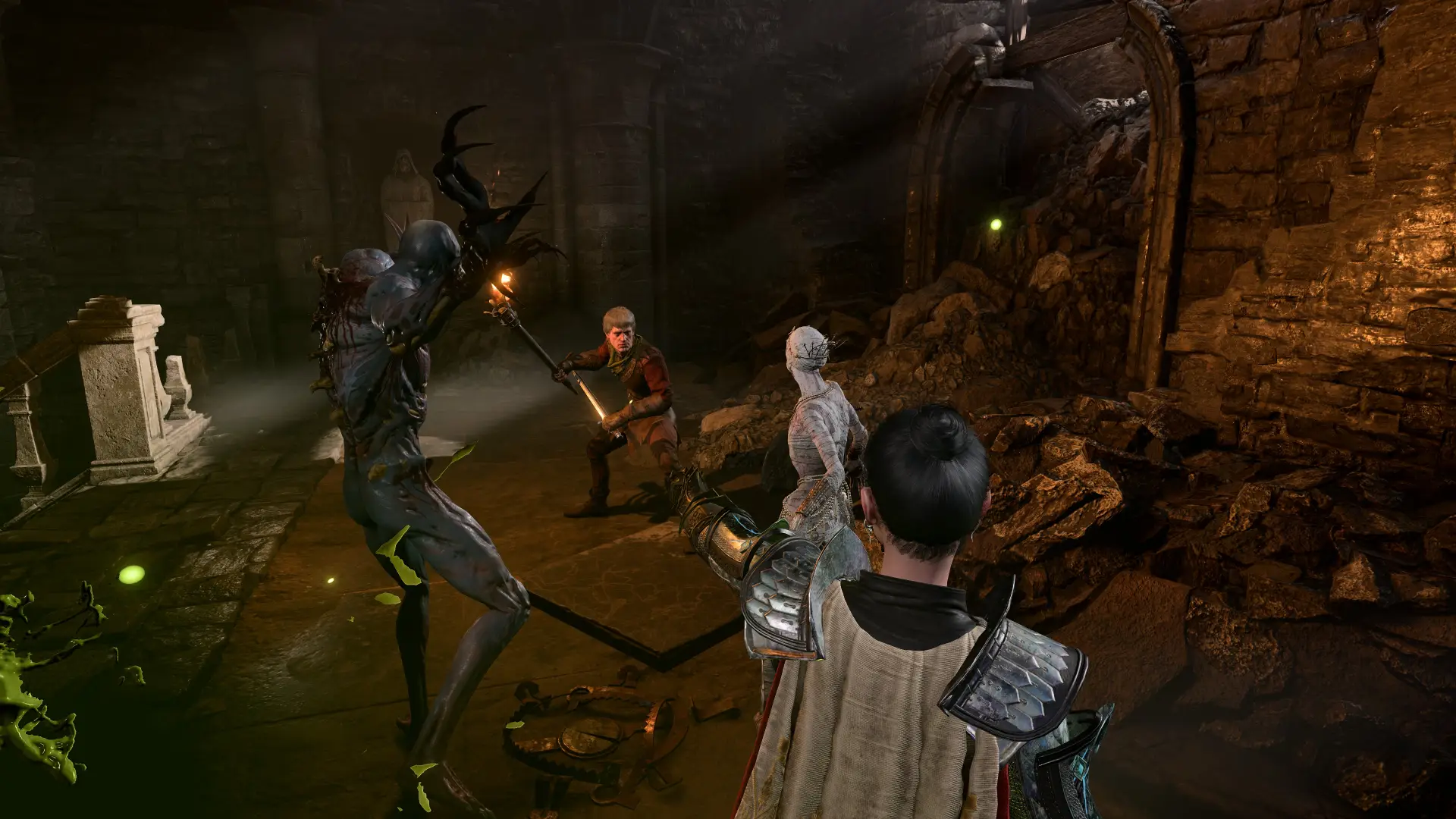
Late-Game Death Domain Cleric Levelling Guide – BG3
We’ll now go through the late-game levelling up process for this Baldur’s Gate 3 Death Domain Cleric Build. This section covers levels 9-12.
Level 9
At Level 9 your Death Cleric’s spellcasting continues to improve, as you can now access even more powerful spells. Here you’ll unlock:
- Another Fourth Level Spell Slot, giving you three in total.
- One Fifth Level Spell Slot, and the ability to prepare Fifth Level Spells.
- Two more Domain Spells from your subclass. Death Domain Cleric gets:
- Cloudkill – Summon a large cloud that deals 5d8 Poison Damage per turn to all within. The cloud requires Concentration to maintain, and you can reposition it each turn. Enemies can attempt a Constitution Save to halve the damage. The downside of this spell is that lots of enemies in BG3 are Resistant to Poison. Right-Click and Examine enemies and check their resistances before using this spell.
- Contagion – This is a complicated spell that lets you choose from one of several contagions to put on an NPC. Each turn, they will roll a Saving Throw. Accumulating three successes will cure them, but three failures will impose the selected disease as a permanent debuff. The effect is applied with a melee Attack Roll, but usually doesn’t trigger hostilities unless you miss or you apply a damaging effect at the same time. You can cheese some encounters by applying Contagion before combat. The Flesh Rot Contagion is especially nasty, as it makes the victim Vulnerable to all damage.
- Prepare one more spell, plus another one to replace Death Ward from Level 8:
- Insect Plague – Locusts attack everyone within a 12 metre area, dealing 4-40 Piercing Damage, making the area Difficult Terrain, and imposing Disadvantage on Perception Checks. Damage is halved on targets that roll a Constitution Saving Throw. This is one of the best spells in the Cleric’s arsenal, and can turn a chokepoint into a deadly killzone that enemies will really struggle to penetrate. Especially useful in Act III due to the narrow streets and tunnels, which make chokepoint tactics especially good.
- Flame Strike – Make a pillar of divine fire roar down from the heavens like the wrath of affronted angels. Deals 5-30 Fire and 5-30 Radiant Damage, unless the target rolls a Dexterity Saving Throw.


Level 10
At Level 10 the Death Domain Cleric unlocks a unique single-use feature to invoke the aid of their god. You gain:
- Another Fifth Level Spell Slot, giving you two in total.
- Choose one more Cantrip. We already picked up the most important Cantrips, so you can choose whatever you like here.
- Divine Intervention – Once per character, invoke your god’s aid. When activating this, you can choose from:
- Sunder the Heretical – Deal 8-80 Radiant Damage to a group of enemies.
- Arm Thy Servant – Grants you a Legendary weapon.
- Opulent Revival – Resurrect fallen Companions with half health and restore nearby allies as if they had Long Rested.
- Golden Generosity – Provides a rich bounty of Potions and Camp Supplies.
- Prepare one more Spell. We recommend:
- Hold Monster – Essentially an upgrade to Hold Person, this spell has the same effect but works on most enemies, removing the previous restriction of humanoid targets.
 Sunder the Heretical – Deal 8-80
  Arm Thy Servant – Grants you a Legendary weapon.
 Opulent Revival – Resurrect fallen Companions with half health and restore nearby allies as if they had Long Rested.
 Golden Generosity – Provides a rich bounty of Potions and Camp Supplies.
Divine Intervention is a potentially good passive for helping you out in a pinch. But beware that this can only be used once per character. There is no way to recharge the ability.
Level 11
At Level 11 you don’t gain any new class abilities, but you do get access to Sixth Level Spells, the most powerful tier of magic in Baldur’s Gate 3.
You’ll gain one Sixth Level Spell Slot, and as usual you’ll be able to prepare one more Spell.
If noone else in your party has the  Heroes’ Feast spell, then get this on your Cleric. It puts an extremely strong buff on you and your party, providing the following benefits until the next Long Rest:
- Immune to Poison and Disease
- Cannot be Frightened
- Extra 12 HP
- Advantage on Wisdom Saving Throws
You should ideally make it a habit to cast both Heroes’ Feast and an upcasted version of  Aid on your party after every Long Rest, to get everyone buffed up.
If someone else has Heroes’ Feast covered already, the consider the  Heal spell. This is single-target burst heal that is guaranteed to restore 70 HP, avoiding the RNG of other healing spells.
Level 12
If you’ve reached this point, then you have finished leveling up your Death Domain Cleric to max level. Congratulations!
At Level 12 you can choose one more Feat for your Cleric Build. Here we have two options, depending on how you are playing the build.
- If you’re using a lot of Concentration Spells, use War Caster, which will give you Advantage on Concentration Saving Throws.
- If you’re still using lots of melee spell Attack Rolls like Vampiric Touch and Inflict Wounds, you can instead get Spell Sniper, which makes it more likely for these spells to Crit and also gives you access to some extra Cantrips, such as Fire Bolt and Eldritch Blast.
I think that War Caster is better on balance, unless you’re leaning really heavily into the melee spells.
You can also choose one more Spell to prepare.
If you didn’t already get the Heal spell mentioned at Level 11, you might want to grab that now.
Alternatively, you could pick  Planar Ally, which allows you to summon a Djinni, Deva or Cambion to fight for you. These are powerful summoned creatures who can help to turn tough battles in your favour. The summon lasts either until it dies or until your next Long Rest.
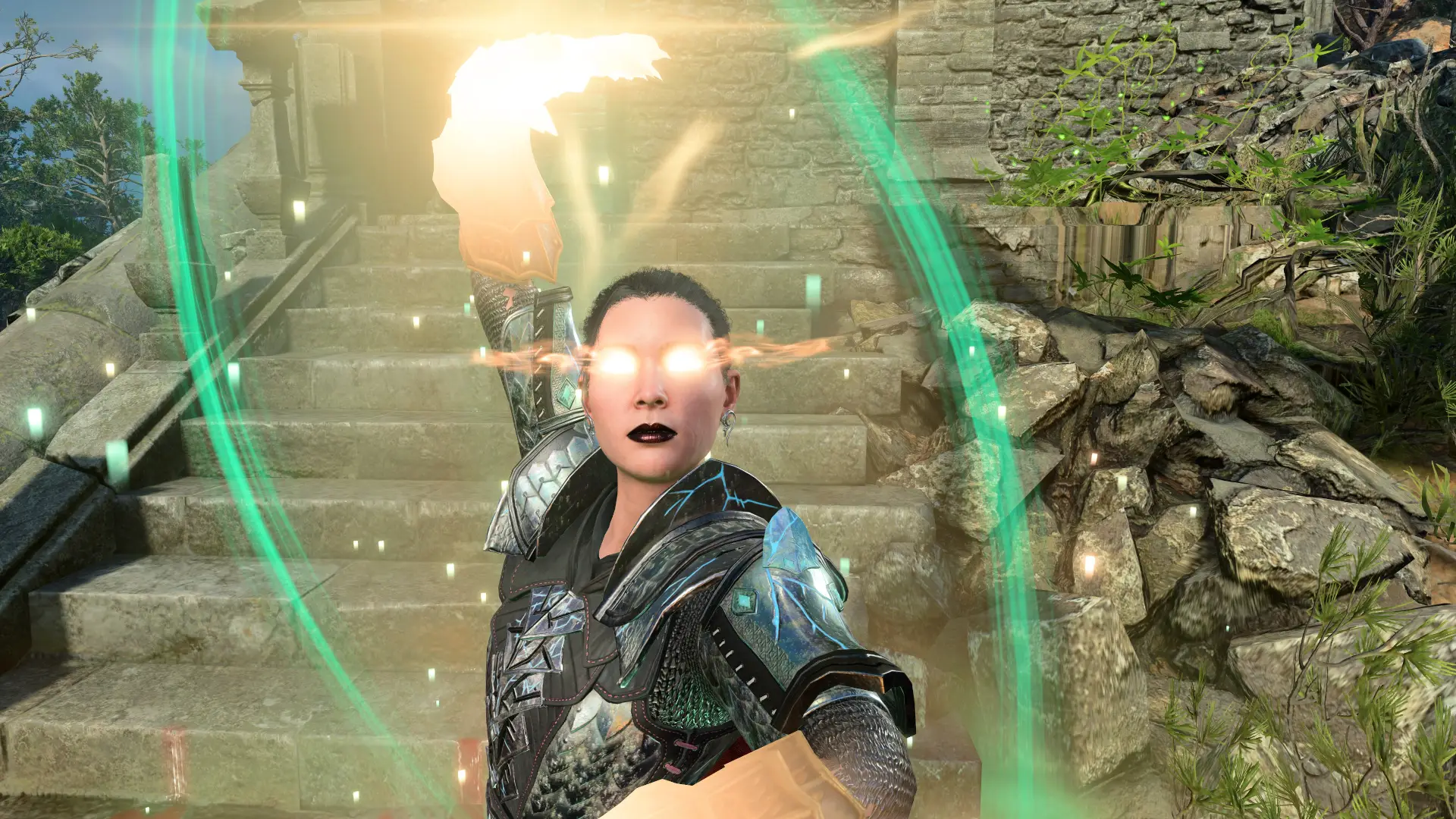
Cleric Build Equipment for Baldur’s Gate 3
In this section we will outline the best equipment recommendations for your Death Cleric. We have included both an early game and a late game section for equipment, so you can use this build no matter how far through the game you are.
Don’t worry if you don’t have all of the listed equipment, and feel free to try out different items and combinations too – this is just a guideline and the build can still work great with some of the equipment changed.
Early-Game
Early-Game equipment is available in Act I and the earlier parts of Act II. It is generally less powerful than the late-game version of the build, however there are still some really handy items that you can find fairly early on in your BG3 playthrough.
For the early-game, we’re going for items that provide protection to the Cleric and improve their spellcasting ability in whatever ways possible. We are also making use of items that provide the Reverberation debuff – this is a Thunder themed debuff that causes enemies to have a hard time on their Saving Throws and can eventually deal extra Thunder damage and knock them Prone.
You can check below the table for more detailed information about each item, including how to obtain them.
| Slot | Icon | Item | Effects | Location |
|---|---|---|---|---|
| Head |  |
Wapira’s Crown |
|
Reward from Zevlor for completing the Save the Refugees quest |
| Cloak |  |
Cloak of Protection |
|
Purchased from Quartermaster Talli in Last Light Inn |
| Chest |  |
Adamantine Scale Mail |
|
Crafted at the Adamantine Forge. Requires Mithral Ore and the Scale Mail Mould |
| Gloves |  |
Swordmaster Gloves |
|
Sold by Dammon at Last Last Light Inn |
| Boots |  |
Vital Conduit Boots |
|
Sold by A’jak’nir Jeera in Crèche Y’llek |
| Necklace |  |
Pearl of Power Amulet |
|
Sold by Omeluum in the Myconid Colony |
| Ring 1 |  |
Eversight Ring |
|
In a locked Opulent Chest in the House of Healing Morgue, in Act II. |
| Ring 2 |  |
The Whispering Promise |
|
Sold by either Volo or Grat the Trader. |
| Main Weapon |  |
Ritual Dagger of Shar |
|
Found on a hidden altar in the bottom of Waning Moon in Act II. |
| Shield |  |
Shield of Devotion |
|
Sold by Quartermaster Talli in Last Light Inn |
| Second Weapon |  |
Spellthief |
|
Sold by Arron in the Druid Grove |
 Armour Class and
  Reeling, reducing their accuracy on future attacks
 Blinded.
 Reaction to attempt to knock a melee attacker
  Prone
Prone
Late-Game
Late-Game Equipment is found in Act III and the latter parts of Act II, however some items from the early-game may also find their way onto this list, if they are powerful enough to remain competitive with items found in the latter parts of the game.
Our setup here is focused on improving your Spell Save DC and Spell Attack Rolls as much as possible, while still giving you solid defences. Don’t worry if you don’t get all of the items on this list. It’s better to view more like a wishlist of ideal items, rather than a precise blueprint. Several of the items on this list are dropped by tough enemies like Cazador and Auntie Ethel, and some others might be completely unavailable depending on your choices. Just try to get as many of them as you can.
| Slot | Icon | Item | Effects | Location |
|---|---|---|---|---|
| Head |  |
Hood of the Weave |
|
Sold by Mystic Carrion in Philgrave’s Mansion |
| Cloak |  |
Cloak of the Weave |
|
Sold by Helsik at the Devil’s Fee, once her special stock has been unlocked. |
| Chest | |
Adamantine Scale Mail |
|
Crafted at the Adamantine Forge. Requires Mithral Ore and the Scale Mail Mould |
| Gloves |  |
Blackguard Gauntlets |
|
Loot from That Which Watches in the Murder Tribunal |
| Boots |  |
Helldusk Boots |
|
In a locked Gilded Chest on the top floor of Wyrm’s Rock Fortress |
| Necklace |  |
Amulet of Greater Health |
|
Take from a trapped pedestal in the Archive of the House of Hope |
| Ring 1 |  |
Ring of Feywild Sparks |
|
Looted from Auntie Ethel in Act III |
| Ring 2 | |
Eversight Ring |
|
In a locked Opulent Chest in the House of Healing Morgue, in Act II. |
| Main Weapon |  |
Rhapsody |
|
Looted from Cazador Szarr |
| Shield |  |
Viconia’s Walking Fortress |
|
Looted from Viconia DeVir in the Cloister of Sombre Embrace |
| Second Weapon | |
The Dead Shot |
|
Sold by Fytz the Firecracker in Stormshore Armoury |
This set-up is intended to make your spellcasting as reliable as possible, by significantly improving both your Attack Rolls and your Spell Save DC. We also have a few items intended to improve your mobility and survivability.
Note the following aspects of our equipment selection for the BG3 Death Domain Cleric Build:
- Spell Save DC – Increases the number enemies need to roll to succeed Saving Throws against your spells. Makes many of your spells more likely to succeed.
- Hood of the Weave
- Cloak of the Weave
- Ring of Feywild Sparks
- Rhapsody
- Attack Rolls – Boosting your Attack Rolls makes your weapon attacks more likely to succeed, and will also boost any spells or cantrips that use Attack Rolls instead of Saving Throws.
- Hood of the Weave (spells only)
- Cloak of the Weave (spells only)
- Blackguard Gauntlets
- The Dead Shot
- Defences – We have added a few items to increase your defensive stats, most notably Armour Class
- Adamantine Scale Mail
- Helldusk Boots
- Amulet of Greater Health
- Viconia’s Walking Fortress
Important Notes:
- Rhapsody gives you a buff each time you kill an enemy (murdering non-hostile NPCs doesn’t count). The buff stacks up to three times, and each stack gives you a +1 bonus to your Spell Save DC. You can consume these stacks to carry out special Actions, such as giving yourself a big heal. But in most cases you should hold onto the buff and enjoy the +3 bonus to Spell Save DC – this alone is a massive buff that will make your spells feel much more reliable.
- If you want to be extra optimal, you could respec your build after getting the Amulet of Greater Health. Since this item sets your Constitution score to 23, you don’t need to put any points into Constitution anymore. Redistribute your Ability Points with this in mind to make your character stronger.
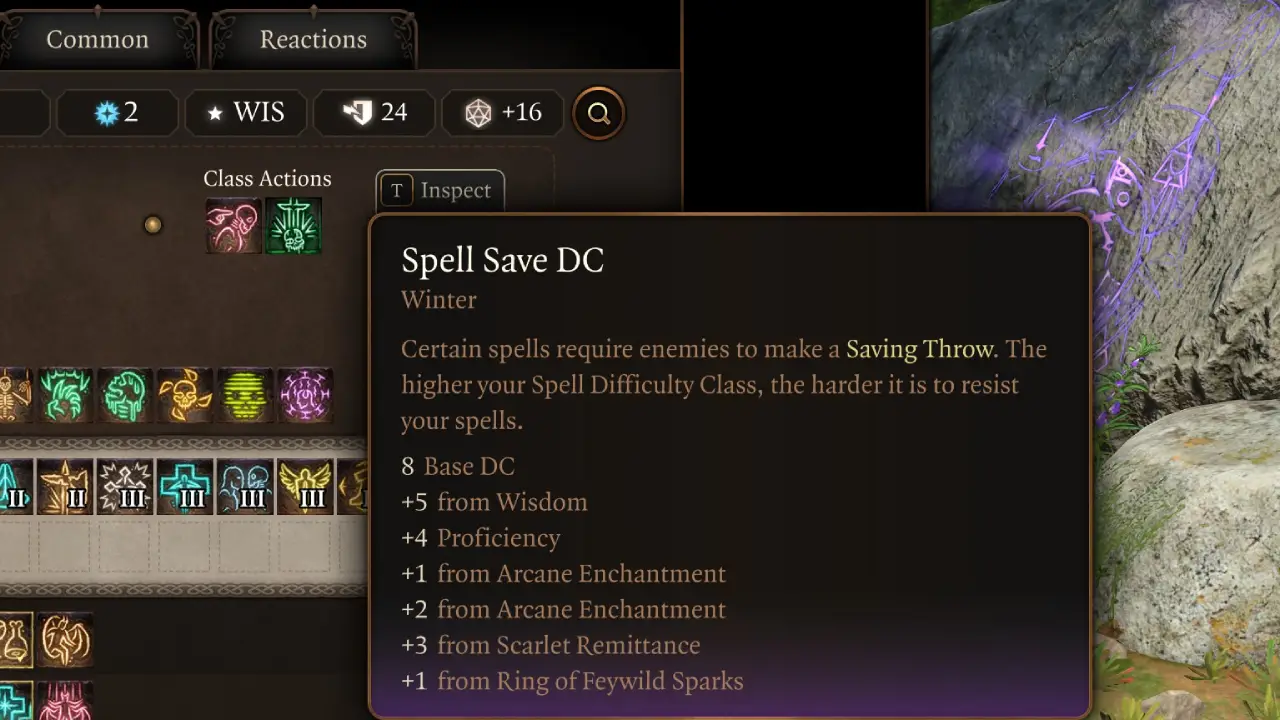
- If you collect all of the gear mentioned here, you can increase your Spell Save Difficulty Class to 24 (with all three stacks of the Rhapsody applied). This makes your spells much more likely to hit.
Death Cleric Extra Info
Here is some additional info that will help you to get the most out of this Death Domain Cleric Build in Baldur’s Gate 3.
How to Play the Trickery Cleric – BG3
Early-Game
For the first few levels, Clerics can feel quite weak because they do poor damage in melee and their main Cantrip ( Sacred Flame) is prone to failure. During these levels, its best to use your magic to support your team with support spells like
  Bless and
  Healing Word.
When you’re not casting spells, use your ranged weapon to deal damage from afar. The Death Cleric has Proficiency with  Longbows or
  Heavy Crossbows, try to get your hands on one of these, as they deal good early-game damage. When Concentrating on a spell like Bless, try to stay safe from enemy attacks by using distance and sight obstructions to prevent them from hitting you. This minimises the chance that your Concentration will be broken. Watch the terrain, too – stepping on a puddle of poison can be enough to break your Concentration if you are unlucky!
One good single-target damage spell Clerics can use from the beginning of the game is  Inflict Wounds. This spell also scales really well with upcasting, so you can keep using it for burst damage for most of the game.
From Level 3 onwards, begin casting Aid after every Long Rest to boost your team’s max HP.
Mid-Game
When you reach level 5, you begin to unlock some much stronger damage spells like  Glyph of Warding and
  Spirit Guardians. You can also upcast Aid progressively higher as you level up, adding another 5 HP per Spell Slot Level. I recommend doing this after every Long Rest to make your party more resilient.
Spirit Guardians creates an AoE of Radiant or Necrotic Damage that follows your Cleric around. You can cast the spell and run through a crowd of enemies, hitting all of them. Just beware of opportunity attacks.
From Level 8 onwards, you get the  Divine Strike feature, infusing 1d8 bonus damage into your weapon attacks once per turn. This is helpful on those turns when casting a spell isn’t possible or appropriate.
Late-Game
At Level 9, you unlock  Insect Plague, a huge AoE that deals heavy damage and slows enemies down significantly.
If you collect the equipment recommended in the guide above, you will find that your Spells and Cantrips succeed more reliably thanks to your boosted Spell Save DC. You should now be able to make much more reliable use of your debuff and control spells like  Hold Person.
At Level 11, you should be upcasting Aid to Level 5 and combining it with the Heroes’ Feast spell to give a massive 33-point HP boost to your party.
The playstyle of the Cleric stays rather similar throughout your playthrough. You are using your Concentration spells to control the battlefield, while sometimes using an AoE spell or single-target burst spell. On the remainder of your turns you are using your weapons to chip away at enemies, and staying out of the way of enemy attacks to keep your spell Concentration safe. In the Late-game, you have much stronger spells to use, but the core playstyle remains the same.
Death Domain Cleric Build Illithid Powers (optional)
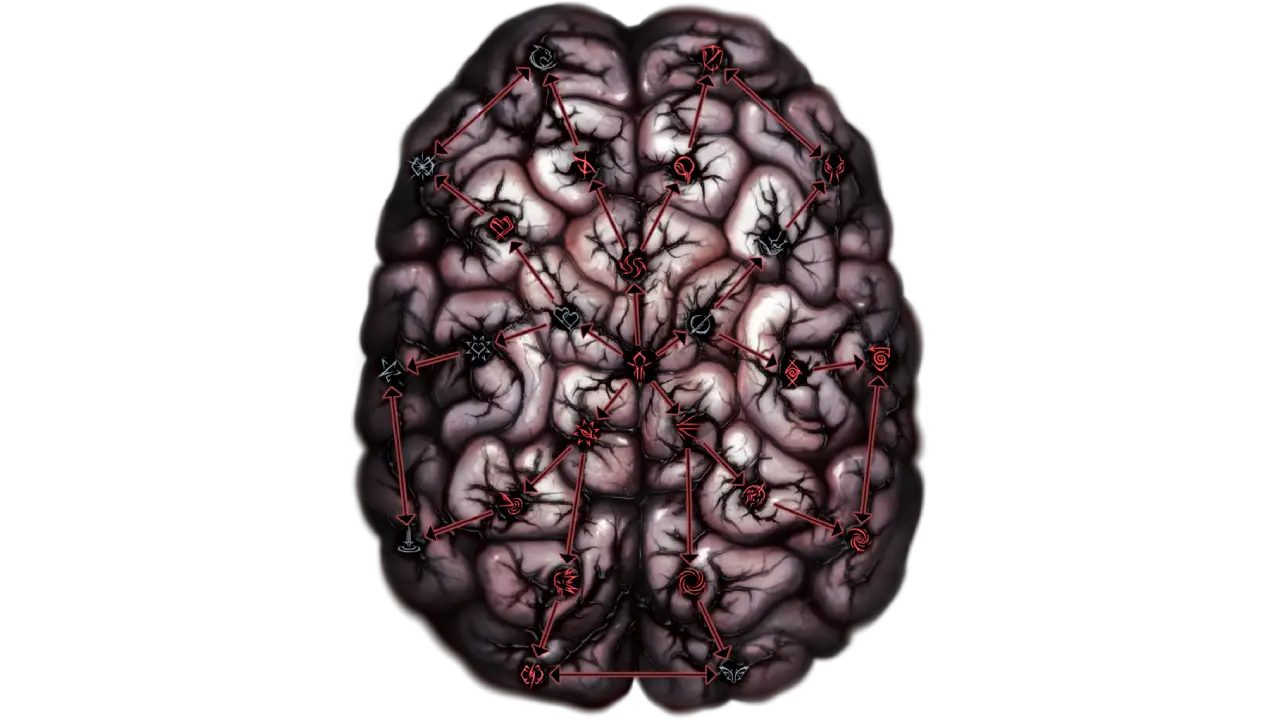
Illithid Powers are unlocked later in BG3 when you learn more about Mind Flayers and Tadpoles. By eating Jars of Mind Flayer Parasites you gain one point. This is another optional skill tree that you can get access to if you want. Here are some of the best Illithid Powers for the BG3 Cleric Build with the Death Domain subclass:
- Concentrated Blast: Allows you to deal extra damage to a target when you are Concentrating on a spell, potentially also healing if the target is Concentrating too.
- Cull the Weak: When you reduce a creature’s hit points below a certain threshold, this power instantly kills it and deals 1-4 Psychic Damage to nearby enemies. This is particularly effective when engaging groups of weaker foes, enabling you to thin their numbers rapidly. You have quite a few AoE spells, which are pretty good at activating this effect.
- Fly: This can be used to reach hard to get to places or change positions in combat.
- Black Hole: This power creates an area-based effect that pulls in and slows targets. It’s particularly useful for crowd control, allowing you to cluster enemies together for area-of-effect attacks or to isolate them from vulnerable allies.
- Psionic Backlash: This is a top-tier Reaction from the Illithid Powers skill tree in BG3. This allows you to deal Psychic Damage when a nearby enemy casts a spell. This is especially useful if the target is casting a Concentration Spell. The damage from Psionic Backlash can immediately break their Concentration, ending the spell’s effects.


Other Baldur’s Gate 3 Builds
- Druid Build – Circle of the Moon
- Bard Build – College of Lore
- Ranger Build – Hunter
- Monk Build – Way of Shadow
- Monk Build – Way of the Four Elements
- Monk Build – Way of the Open Hand
- Necromancer Build – Necromancy
- Fighter Build – Battle Master
- Barbarian Build – Berserker
- Warlock Build – Great Old One
- Cleric Build – Light Domain
- Rogue Build – Thief
- Sorcerer Build – Wild Magic
- Wizard Build – Evocation School
- Paladin – Oath of Ancients
- More Baldur’s Gate Guides & Builds
If you want to check out the map of Baldur’s Gate 3, please visit the Baldur’s Gate 3 Interactive Map.