

Nurgle is one of the playable races of the Total War: Warhammer 3 game at release. The inexorable spread of Nurgle’s forces across the world is assisted by His many plagues and diseases. However, like any other major Chaos power, there is also a swarm of daemons at His behest, skittering and marching across the battlefield.
The coming of Nurgle is accompanied by the laughter and joy of smiling daemons, a tide of rolling infection that grins as it moves. They are as thoroughly without mercy as any Warhammer race, but they think they’re doing you a favour.
- Corruption – Nurgle Corruption
- Climates
- Suitable: Unknown
- Unpleasant: Unknown
- Uninhabitable: Unknown
Ku’gath Plaguefather – Legendary Lord
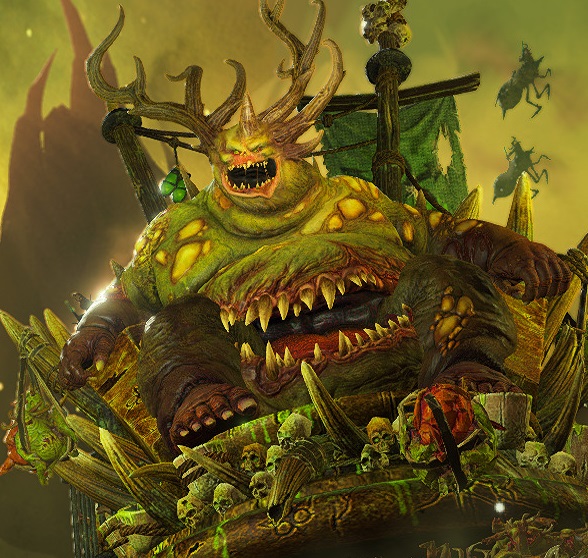
- Name: Ku’gath Plaguefather
- Faction: Unknown
- Race: Nurgle
Table of Contents
Nurgle Legendary Lords
Nurgle has one Legendary Lords at the launch of the Total War: Warhammer 3 game, his name is Ku’gath Plaguefather and he rides a Nurgling Palanquin as default mount.
Ku’gath Plaguefather – Legendary Lord Nurgle
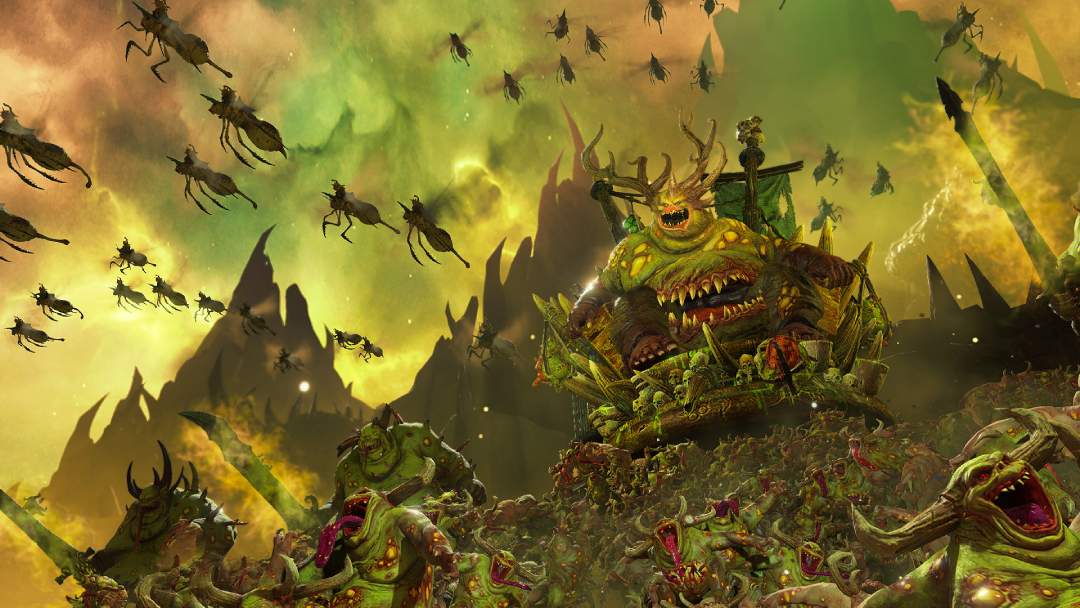
Whilst other Great Unclean Ones work to spread the plagues already extant, Ku’gath, the Plaguefather, is fascinated by the breeding of new and virulent life. Ku’gath aims to one day breed a contagion that can infect the Gods themselves. The Plaguefather rides upon a massive palanquin bedecked with alchemical paraphernalia: vials full of seething powder, flasks of indescribable liquid and hessian sacks stuffed to bursting with Nurglings. This great bulk is held aloft by a carpet of straining Nurglings, and Ku’gath is attended on by countless others, all bred from the Plaguefather’s pox vats.
In battle, Ku’gath operates as the campaign’s earliest-available artillery piece, hurling explosive Nurglings across half the map to detonate in the ranks of his enemies. He’s an expert spellcaster in the Lore of Nurgle, a uniquely powerful daemon summoner who can bring more of those explosive Nurglings onto the battlefield, and one very smelly boy.
While not a titan of single combat, he is still a Great Unclean One of immense power and renown, and thus not an easy target for anyone or thing. A great leader of his armies and an inspiring figure to all those that bear the Mark of Nurgle. From atop his Nurgling Palanquin he preaches the word of his lord, inspiring all who hear it and don’t consider it the most rotten filth imaginable.
- Lores: Lore of Nurgle
- Mounts: None, but rides a Nurgling Palanquin as default
Nurgle Lords
Nurgle has acces to two lords, the Herald of Nurgle and the Exalted Great Unclean One. They both wield the Lore of Nurgle and Lore of Death.
Herald of Nurgle – Nurgle Lord
The longer a victim can endure against Nurgle’s Rot, the greater in the Plaguelord’s sight the resulting Daemon shall be. From the souls of such hardy individuals are shaped the repulsive Heralds of Nurgle, who march in the Daemonic legions as proof positive that even the strongest and ablest cannot indefinitely defy disease. Heralds of Nurgle possess a strength and hardiness that belies their rotten frames, as well as a jovial nature somewhat at odds with the world-weary aspect of their droning minions.
- Mounts: Nurgle Palanquin or Rot Fly
- Lores: Lore of Nurgle or Lore of Death
Exalted Great Unclean One – Nurgle Lord
In perverse contrast to his horrific appearance, the Exalted Great Unclean One is neither morbid nor consumed with despair – if anything the opposite is true. Exalted Great Unclean Ones are exuberant in the pursuit of their enthusiasms. Gregarious and curiously sentimental, they hold their followers dear and even refer to them as their ‘children’. They take great patriarchal pride in the achievements of their fellow creatures, proclaiming vociferously the splendours of the poxes and sores evinced by those around them, and bellow with hearty laughter in response to the destruction wrought in Nurgle’s name.
Each is a being of magical power near un-matched, imbuing the air itself with the necessary energy to render all around them into the fleshy slush of ravaged corpses. Within their bodies live a thousand thousand contagions unborn, as well as the flies and beasts that feed off such sickness. At a moment’s notice they can unleash this on enemy troops, buzzing distraction proving as deadly a foe as the cursed blades of the Plaguebearers.
- Lores: Lore of Nurgle or Lore of Death
Nurgle Heroes
With the launch of Total War: Warhammer 3 you will have access to two hero types for Nurgle. The Cultist of Nurgle and the Plagueridden hero.
Cultist of Nurgle Hero
The fell Gods of Chaos ask for total and complete devotion from their mortal followers, and they grow strong upon the conflict and slaughter they unleash. In exchange, the Ruinous Powers offer their dark blessings – gifts that make the faithful mighty indeed. The Mark of Nurgle manifests itself in a variety of disgusting afflictions. A cloud of flies accompanies its bearers, making them difficult to target.
Cultists exist to spread the corruption of their god, Nurgle’s in particular. His most devoted servants carry plagues and worse the world over, infiltrating towns and armies to use their very bodies as fuel for the spread of His glorious gifts. These Plague Cultists exist purely for that purpose, outside of the normal deployment of Cultists.
While normal Cultists can serve in battle, they are a stronger force wandering the world, spreading corruption, sabotaging enemy plans, scouting, and generally making a rotten nuisance of themselves.
Plagueridden Hero
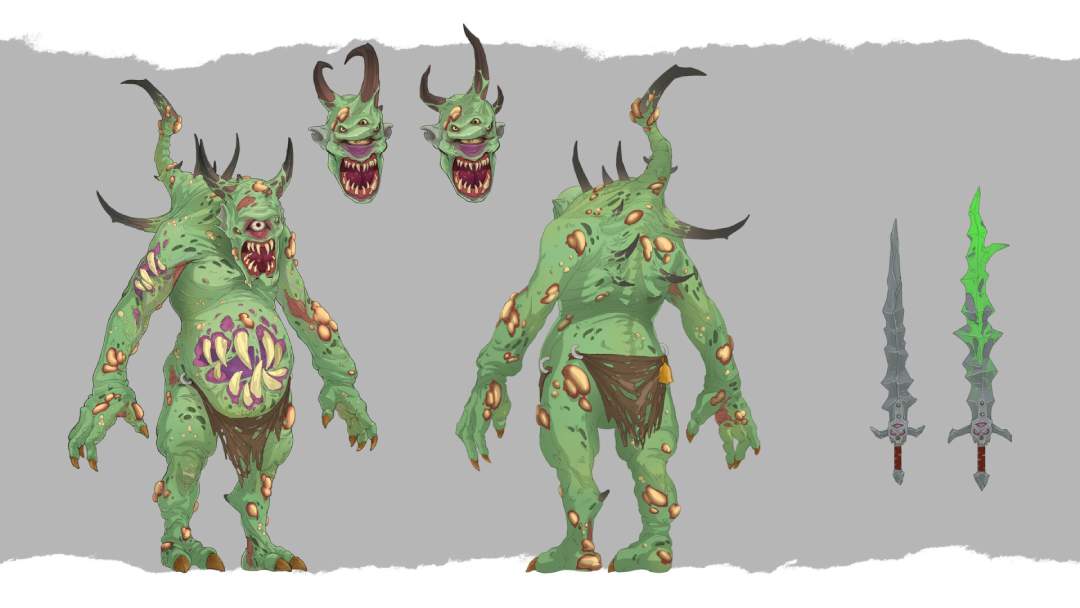
Though they share many loathsome features, Plaguebearers are by no means identical in appearance and ability, for Nurgle’s Rot is somewhat variable in its virulence and incubation. Once infected, your life is over, it is simply a matter of time and final result. Those hardy individuals who may consider themselves lucky, strong enough to resist the gifts of Nurgle even, do not get the last laugh. They are shaped into the repulsive Plagueridden, who march in the Daemonic legions as proof positive that even the strongest and ablest cannot indefinitely defy disease.
They are hubs of sickness, a beacon for their allies which increases their strength or rots away enemies when they are nearby. A Plagueridden is also a caster, destroying enemies through magical infection and disease as much as physical.
- Lores: Lore of Nurgle or Lore of Death
- Mounts: Nurgling Palanquin or Rot Fly
Nurgle Units in Warhammer 3
Now lets take a closer look at all the revealed units for Nurgle in Total War: Warhammer 3.
Nurgle Infantery
Nurgle has access to four types of infantery in Warhammer 3, the Nurglings, Plaguebearers of Nurgle, Forsaken of Nurgle and the Exalted Plaguebearers of Nurgle.
Nurglings
The rotting bowels of the Great Unclean Ones swell with pus and contagion, and within each swelling there grows a tiny and malevolent Daemon called a Nurgling. Physically, they are miniature versions of Nurgle himself, with friendly mischievous faces, tiny, bloated green bodies, and limbs that are often distorted or disproportionate. When faced with an enemy they advance in a furious swarm, clawing and gnawing at the foe’s legs, biting his ankles and licking at any interesting sores or abrasions they discover.
Notable characteristics of the Nurglings in Warhammer 3:
- All Nurglish daemons – so everything except Forsaken and Spawn – share a couple of traits. Poison Attacks and Cloud of Flies both represent the constant sickliness and aura of disease that surrounds them. The latter increases the Melee Defence of the unit if they are in extended melee combat.
- All daemons also share the causes fear and physical resistance traits, as well as granting immunity to terror and routing, and causing damage when Leadership drops.
- Nurglings may deploy far out from the main force with Vanguard Deployment, because they’re good little lads. Just absolute champs.
Plaguebearers of Nurgle
The rank and file of Nurgle’s legions, crafted from the soul-stuff of mortals who have been slain by Nurgle’s Rot. What little of the Plaguebearer’s skin that can be seen beneath the discharge of innumerable sores is tinged with suppurant greens and vile browns. Pus weeps continuously from its single bloodshot eye and from the Daemon’s forehead protrudes a single horn – the mark of Nurgle’s Rot. Units of Plaguebearers are surrounded by a constant drone, created by the attendant hosts of plump black flies.
Notable characteristics of the Plaguebearers of Nurgle in Warhammer 3:
- What they lack in armour and skill, Plaguebearers make up for in pure strength and health. They are blobs of flesh ready to absorb the enemy and strike back.
- In general, Nurgle’s armies are slow – the plod of an oncoming, inevitable death – and Plaguebearers are some of the slowest.
- No matter how nicely they ask, do not hug.
Forsaken of Nurgle
Forsaken are frothing maniacs that howl and scream as they sprint pell-mell towards the enemy lines, mutated limbs flailing and distended jaws snapping like those of ravenous beasts. Though they were once proud and mighty Chaos Warriors, because of the severe mutations bestowed upon them, they have become something less than human, with no more understanding of battlefield tactics than the hounds that gather around their bone-strewn lairs. These unfortunates have been reduced to the level of animals, and snarl and growl in a guttural parody of true language.
Notable characteristics of the Forsaken of Nurgle in Warhammer 3:
- As one of the few non-daemonic units, Forsaken cover an important role in Nurgle armies as hardy and quick-moving forcecs.
- They are in a constant frenzy, cause fear, and are immune to psychology.
- Significantly lower melee defence and health than Plaguebearers, giving you a choice of ways to destroy your enemies.
Exalted Plaguebearers of Nurgle
It is the Plaguebearer’s eternal role to herd Nurgle’s Daemonic forces in battle, as well as keep stock of the diseases, allocate appropriate fates to each new victim, and attempt to maintain order amongst a naturally chaotic horde. These onerous duties have earned Plaguebearers the title of Nurgle’s Tallymen in popular lore. It is all but impossible to tally anything amid the chaos of battle, though this in no way discourages the Plaguebearers from their efforts. They are the embodiment of the need of mortal creatures to impose meaning upon an uncaring void.
Notable characteristics of the Exalted Plaguebearers of Nurgle in Warhammer 3:
- Bigger, stronger, and more powerful Plaguebearers.
- The Exalted also sport a special ranged weapon, throwing small versions of the Death’s Head at enemies as they close. This has armour-piercing properties, but a very limited ammunition count.
- This also poisons, like almost everything Nurgle does. This weakens speed and damage of any unit affected.
Nurgle Monsters and Beasts
Nurgle has plenty of monster and beast units in Total War: Warhammer 3.
Chaos Furies (Nurgle)
Furies are yowling shards of malevolent energy – Chaos in its purest form. With little in the way of intelligence, they are utterly subservient to the whims of the Dark Gods, and shift in aspect and power as the balance of the dark pantheon alters. They are easily subjugated by other Daemons, whom they regard with a mix of dread and awe. Furies swarm at the edges of the battle, avoiding the thickest fighting if they can. Only when they sight a vulnerable victim do they descend, a wailing mass from which there can be no escape.
Notable characteristics of the Chaos Furies in Warhammer 3:
- For a slow army like Nurgle, the extremely speedy Furies serve a harrying and out-flanking purpose unfulfilled by many other units.
- Their poison attacks also mean that hit-and-run is effective for slowing down enemies and keeping them in combat for longer.
- Useful support for Nurglings with Vanguard Deployment, as both will be killed quickly in a pitched, unit vs. unit battle.
Beast of Nurgle
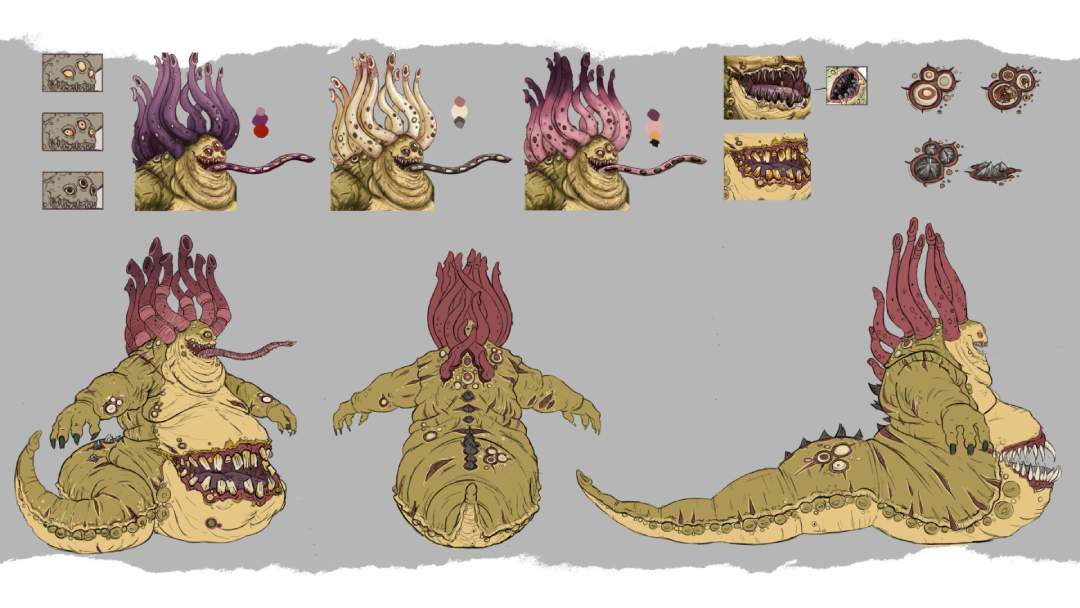
The Beast of Nurgle is a truly horrendous aberration, no less deadly than it is morbidly and irrefutably ugly. Its corpulent form is both sticky and slimy, as a layer of infectious ooze seeps from its every pore and orifice. Despite its fearsome appearance and deadly attributes, the Beast is an affectionate creature that behaves in all respects exactly like an overfriendly and easily excited puppy. It craves attention, greeting newcomers by slobbering all over them and petting them with its slimy tentacles. Once the Beast’s new friend stops moving, its interest quickly shifts to another target.
Notable characteristics of the Beasts of Nurgle in Warhammer 3:
- Regenerating flesh is weak to fire but strong to death.
- Oozing slime in all directions even as it sits still, this magic clings to enemies and slows them down.
- “A happy chappy.” – James Martin, game designer.
Plague Toads of Nurgle
The blackest, filth-choked lagoons and lightless sumps of the Plaguefather’s realm have served as a spawning ground to all manner of daemonic beasts and foul creatures. They are toad-like bags of brackish filth and pus whose wide maws can swallow a man whole. As well as being dragged along like pestilent flies in the wake of Chaos summonings and Daemonic incursions, these maligned Daemons are drawn to places of disease and decay in the mortal world such as the dank reaches of sewer-pits and stagnant mires, devouring the unwary that cross their path and finding sustenance in suffering and befoulment.
Notable characteristics of the Plague Toads of Nurgle in Warhammer 3:
- Take the role of light cavalry or powerful war beasts from another army, though with their own unique gait and feel.
- Will smash aside lighter units with pure body weight, giving them anti-infantry properties.
- On the cheaper and speedier side for Nurgle.
Rot Flies
Beasts of Nurgle, perpetually disappointed by the rag-doll inactivity of their mortal playthings, develop a kernel of bitterness in their ebullient souls. Crestfallen puzzlement leads to frustration and ultimately an aching resentment of the mortals that spurn its company. Over the millennia, a thin seed of malice grows in such a Beast’s heart, feeding upon depression and angst until it throbs like a canker at the Daemon’s core. Eventually the creature within bursts out of its fleshy sac as a full-grown Rot Fly, a creature of pitiless malice hell-bent on wreaking its revenge upon an uncaring universe.
Notable characteristics of the Rot Flies in Warhammer 3:
- A fast-moving, armour-piercing, flying unit makes a powerful Nurgle piece when combined with His other units.
- Taking the opportunity to highlight our new flying toggle, which works as well with Rot Flies as any other flying melee unit.
- See, see what happens when you aren’t nice to a Beast of Nurgle? Look what you did. You gave it anxiety.
Pox Riders of Nurgle
Shambolic but purposeful, where they can Plaguebearers capture and harness Plague Toads to be their mounts, stalking and squeezing them from their filth-choked lairs in the darkest cesspools of the realm of decay. These Pox Riders, as they are known, often take the vanguard of a Plaguedaemon battle line, crashing into the ranks of mortal foes like bloated cannonballs, their riders’ tainted blades slashing about them, necrotic filth and brackish blood spraying up from them as they fall, heedless of their losses.
Notable characteristics of the Pox Riders of Nurgle in Warhammer 3:
- Unlikely to outpace other cavalry on over-large, infected toads, but they’ll give it their best shot.
- Their charge is, however, no less devastating, and the addition of a flailing, droning Plaguebearer to the jaws and mass of its steed is not pleasant for Nurgle’s enemies.
- If the unit is injured (or is still replenishing after being hired, Nurgle campaign mechanics readers), is that a frog fraction?
Spawn of Nurgle
Should Nurgle continue to pile on His dubious gifts, the recipient will devolve into a mindless, hideous creature known as a Chaos Spawn. Though the Plague God may turn His champion into a spawn if they have displeased him in some way, he is just as likely to do so simply as a result of inadvertently heaping one mutation upon another. Though their forms are repulsive, these gibbering once-men are revered by the followers of Chaos, for they believe that it is better to know the briefest and most vile of existences at the behest of the Ruinous Powers than to grow old without drawing their notice.
Notable characteristics of the Spawn of Nurgle in Warhammer 3:
- As well as the poisonous attacks befitting any chum of Nurgle’s, Spawn of Nurgle will regenerate over time.
- Over Nurgle’s other forces, Spawn offer a significantly higher weapon strength and speed than most troops.
- On the flip side, their high health gels well with Nurgle’s other troops and access to various healing affects.
Plague Drones of Nurgle
High-ranking Plaguebearers are known amongst the Daemon legions as Plague Drones; a title that conveys commendable humility, yet belies the power beneath. These stewards of Nurgle’s garden ride into the mortal realm mounted upon Rot Flies – colossal Daemon-insects whose appearance is so repugnant it leaves festering scars upon the mind. From their lofty positions the Plague Drones can properly tally the diseases running rife across the battlefield, as well as swiftly intervene should Nurgle’s divine plans meet with heavily-armed resistance.
When facing the unremarkable warriors of the mortal realm, a Rot Fly will slowly digest all meat from a skull before spitting out a plague-infused death’s head that its Plaguebearer rider can hurl at the foe. Given the chance, though, Rot Flies will hunt down the impertinent mortals that slew their previous incarnations. Opening their maws wider than physical law should allow, they consume their persecutors whole.
Variants:
- Flying War Beasts
- Death’s Heads
Notable characteristics of the Plague Drones of Nurgle in Warhammer 3:
- One extra angry, bile-spewing daemon per Rot Fly adds a mixture of additional stats to the mix.
- Death’s Head variant gives a powerful, but low ammunition, ranged attack to help to soften up targets.
- One more for our “daemon riding a daemon” tally.
Great Unclean One
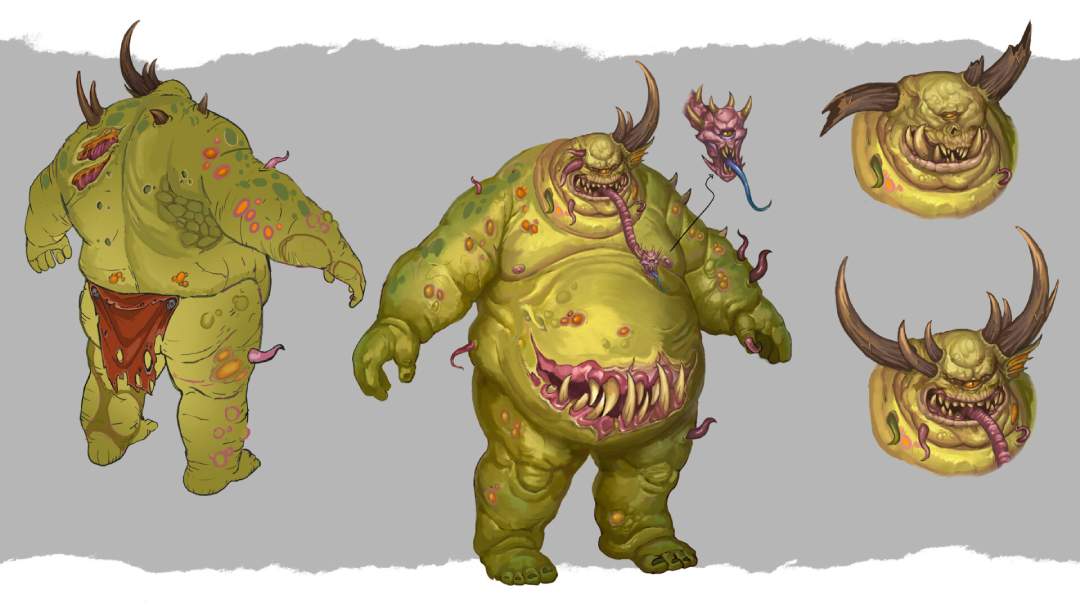
The Great Unclean One is a gigantic figure bloated with decay, disease and all imaginable kinds of physical corruption, the Daemon’s skin is a necrose and leathery surface covered with pockmarks, sores and other signs of loathsome infestation. His inner organs, rank with decay, spill through the ruptured skin and hang like rotting drapes about an immense girth. From these organs burst tiny pustulant creatures called Nurglings, which chew and suck upon the nauseous juices within. Such foulness echoes the fundamental truth of the universe: whilst there is life, there will be ruin and decay, even unto the end of all things.
Notable characteristics of the Great Unclean One in Warhammer 3:
- Has access to various spells from the Lore of Nurgle, making it an all-around menace.
- A Great Unclean One is a truly disgusting thing to face, spreading terror through the ranks of opponents as it digests them.
- Giant armour-piercing strikes can cut through fortress doors as easily as flesh.
Nurgle Missle Monsters and Beasts
Nurgle has access to one missle monster, the Soul Grinder.
Soul Grinder (Nurgle)
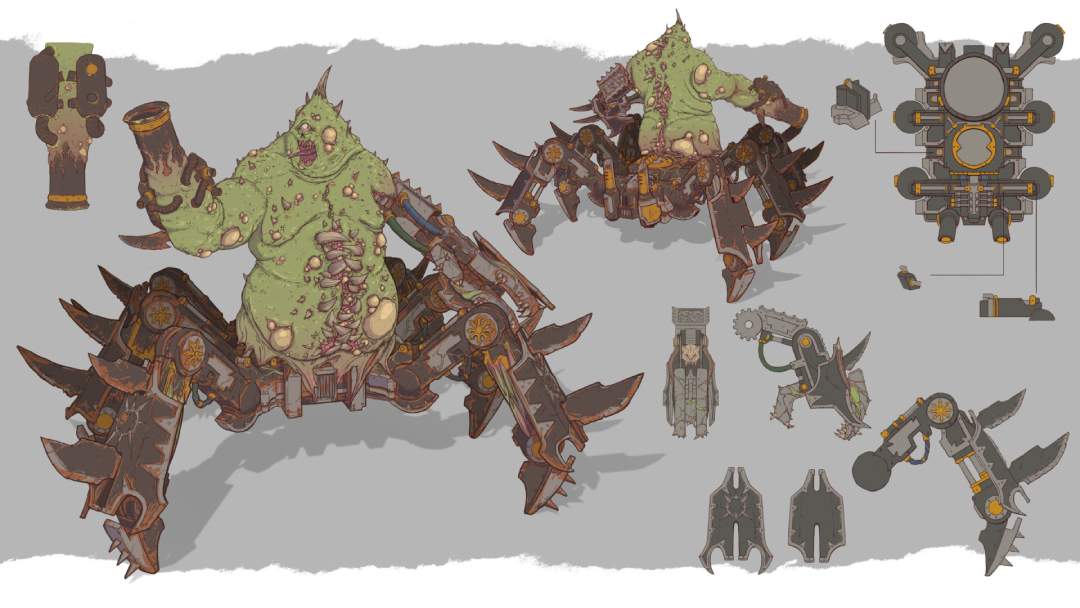
When a Daemon’s physical body is slain, he can surrender his true name to the Forge of Souls. The dark bargain thus sealed, his crippled essence is bound to a mighty Warp-metal hulk. Thus is he reborn as a Soul Grinder. A Soul Grinder’s clanking tread shakes the ground with every step, and it is devilishly fast for a creature its size, able to scuttle swift as a horse’s gallop, or even faster should the scent of battle touch its nostrils. Piston-driven legs thud home with sickening force, crushing to bloody paste those beneath.
Notable characteristics of the Soul Grinder in Warhammer 3:
- The Nurgle variant of the terrifying Soul Grinder can vomit gobs of poisonous material at artillery ranges to destroy formations.
- Maintains great melee capabilities of other variants, making it a fantastic all-rounder.
- Other Nurgle passives make it hardier in combat too.
Nurgle Campaign Mechanics
Lets take a look what Nurgle has to offer in terms of campaign mechanics in Warhammer 3.
Death and Rebirth
Nurgle does not spread akin to a normal faction. There are no labourers building great monuments to their gods, no scribes researching their latest magical obsession, not even the gruesome fighting pits of a Khornate bloodbath disguising itself as a town or city. Grandfather’s people need not gather to worship nor prove themselves with acts of devotion – he runs through their blood, after all.
No, settlements infected by Nurgle are closer to growths that blight the landscape than real towns. Fields of rotting flowers, mushrooms and creeping vines – and at the center of it all, a great tree pulsing with life, death, and infection.
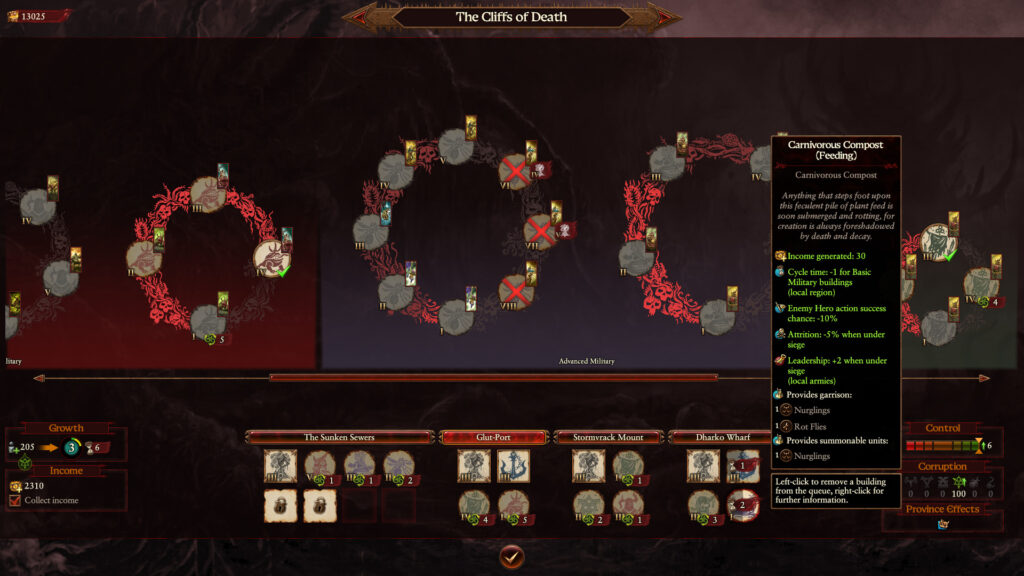
In this manner, Nurgle buildings are not upgraded, they grow, flourish, die, and are reborn. Each building will evolve to its next phase over a number of turns, eventually withering and starting again from a base state. At each point its effects will be different, and each new evolution will add units to the recruitment pool – which we’ll come on to in a second.
Say you choose a building slot to house a Rancid Aloe. After a few turns of building, it will complete and add a Forsaken of Nurgle unit to your pool, the secretions from the plant having been used to fuse metal and flesh in a manner pleasing to Grandfather. It will then begin to pollinate, and four turns later enter the germination phase. This increases the income the building generates and adds another unit of Forsaken to your pool. Another four turns, another boost in income, and this time a Spawn of Nurgle.
This is true of all Nurgle buildings, be they for infrastructure or provide units. Indeed, many do both, spewing Nurglings as a byproduct even as their primary purpose is to support the region by infecting the Earth itself, increasing Control. In addition, various buildings, technologies, plagues, and so on can decrease the time between each phase, making the production of units quicker.
On that topic, Nurgle does not recruit units in the standard way. Rather than waiting several turns for a regiment to become ready to fight, groups of daemons are summoned directly to an army, raring to go. Units hired this way do not start at full strength, replenishing over time – another thing that can be buffed by various Nurglish skills and technologies. They can also be recruited in any neutral or friendly territory from a global pool, pulled from the Chaos Realms to help in the fight. There are caps on how many of each unit can be in the global pool, but as you approach the late game you are going to be able to fill and refill armies at an alarming rate.
As you can imagine, this completely changes basically everything about how you build armies, make war, plan routes, and your priorities for settlements. You will have a lot more resources to spend, as you don’t need to regularly upgrade buildings, but each new settlement will cost more to get some basic stuff going. Once your unit stockpile is gone, refilling it takes more time, but it can happen extremely quickly once you have a large number of settlements.
Plagues and Infections
Central to Nurgle’s campaign mechanics, and indeed his lore, purpose, and very existence, is the creation and spread of new plagues. His forces, their settlements and lords, are locuses of rot, spinning webs of flesh and disease that destroy and rebuild everything around them. Grandfather Nurgle and his many followers believe, without a shadow of a doubt, that they are bestowing glorious gifts upon the world, that their enemies will be happier and more beautiful with new life bubbling across their skin. You, as the player, get to create all that, and let it pass through your own armies, enemies, and settlements on both sides.
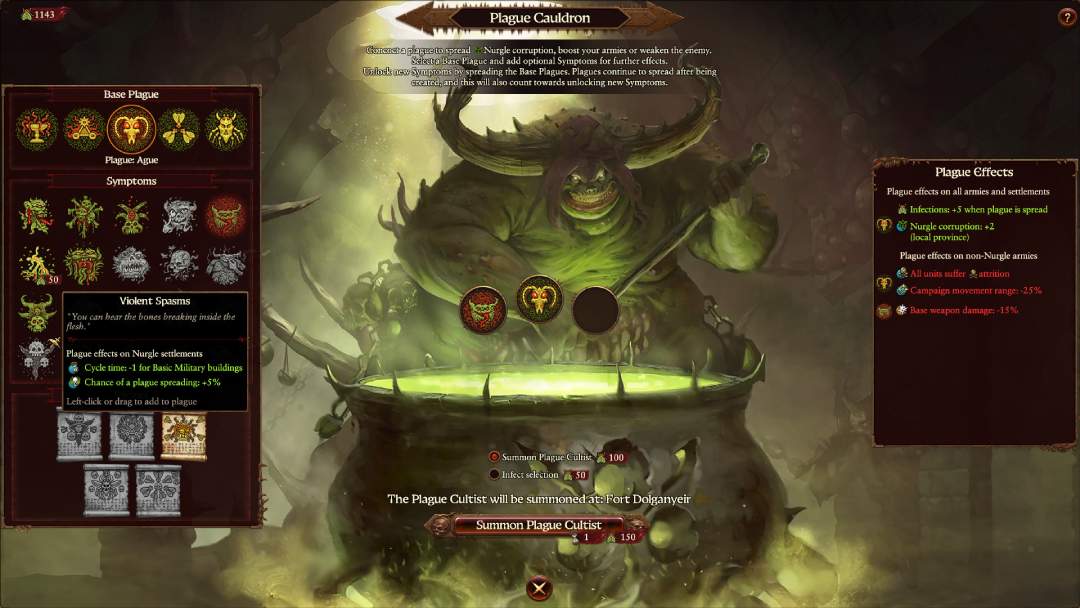
The work begins in the Plague Cauldron, a new special screen only accessible to Nurgle players. Here, various plagues can be concocted out of the bases and symptoms you have unlocked. The broad rules are that negative effects will be applied to infected enemy settlements and armies, while positive ones will hit your own towns and forces. All plagues give additional Infections (explained in a moment) and Nurgle corruption every time they are spread to a new target – with one exception. Here are the five starter plagues:
- Pox – decreases cycle time for friendly buildings, increases growth for friendly settlements.
- Buboes – reduces casualty replenishment rate and increases attrition while under siege within enemy settlements.
- Ague – applies attrition to enemy armies and reduces their campaign movement range.
- Rot – instead of giving Infections whenever it is spread, adds a unit of Nurglings to your recruitment pool.
- Palsy – reduces melee attack of enemy armies.
A plague consists of one of those bases and then up to two additional symptoms. Distributing it to the world can be done in two ways – directly, or via plague cultists. Doing it directly can only be done on friendly settlements and armies, but at a significantly reduced cost of Infections. Infections are gathered from spreading plagues, post-battle events, dilemmas, and so on. Each additional symptom on a plague increases the cost by a certain amount.
Plague Cultists are new hero units that exist solely to spread the plague to neutral or enemy armies or settlements. They cost significantly more to create, but there is no stopping their infection once they reach their target. Spreading the plague destroys the cultist, and only one plague may be infecting one particular thing at a time – be it cultist, army, or settlement. Naturally, friendly AI factions won’t be delighted if you start spreading plagues throughout their territory.
Once a plague is in the world it has a chance to spread between settlements and armies that are in close proximity. Battles between armies will always spread the plague from one to the other. Spreading plagues with particular bases is how you unlock new symptoms, as well as through technologies. The chance for plagues to spread and how many turns they last is all improvable via various means. The intent is that at any time you will have a variety of plagues spreading throughout the world, often far beyond your control or means. They may loop back to your own settlements and armies at surprising times, or be spreading through an entire enemy empire without you necessarily meaning it to.
Finally, once you have unlocked various symptoms, there are recipes. These are particularly powerful plagues, such as Nurgle’s Rot and the Black Plague, that come with additional benefits to duration and chance to spread.
Right, if the word ‘plague’ hasn’t lost all meaning to you due to overuse, let’s continue…
Unholy Manifestations and Cults
As with our other daemon factions, Nurgle has access to the Unholy Manifestations and Cult mechanics. Quick refresher: Unholy Manifestations are special actions unlocked by having a certain level of global corruption for your Chaos God, while Cults are special building slots unlocked in other faction’s settlements by having high corruption there.
Nurgle’s Unholy Manifestations are:
- Pestilent Growth
- Unlocked from the start.
- Gives a 20% replenishment rate boost to an army for two turns, while disabling their campaign movement.
- Blessing of Nurgle
- Requires 1000 global Nurgle corruption
- Increases the chance of plagues spreading in the local province by 30% for three turns, but disables campaign movement.
- Exponential Growth
- Requires 2000 global Nurgle corruption
- Increases growth in the local province by 200 and decreases recruitment costs by 20% for target army for three turns.
- Nurgle’s Visitation
- Requires 3000 global Nurgle corruption
- After three turns, gives a random plague to every army and settlement in the same province as target army. Disables campaign movement for the army while it charges.
Note that both growth and replenishment are particularly useful to Nurgle, as their main buildings are the only ones that require upgrades and control how far their other buildings go into their respective loops. Naturally, replenishment helps newly recruited units get up to strength quickly – this could also re-prioritise your lord skill tree choices, for example.
Also, all these Manifestations are improved if Nurgle is in Ascendancy in the Great Game. Ascendancy is weighted based on the number of settlements, armies, and amount of favour gathered by all the factions dedicated to that God. It can still switch between any of the four when it changes, but the better you and your Godly allies are doing, the more likely you are to be in Ascendancy.
Meanwhile for the Plague Cults the following buildings are available:
- Shelter
- Gives 25 infections per turn.
- Refuge
- Gives 40 infections per turn if growth in the region is at 200 or more.
- Hospice
- Gives 40 infections per turn if any Lord is present.
- Colony
- Gives a random plague to the settlement, but destroys the cult.
It’s of note for both of these that spreading corruption is easier and quicker for Nurgle factions over the other Chaos factions. Plagues naturally spread corruption, can be upgraded to spread more, and various characters and buildings have big boosts to spreading as well. This means quicker manifestation unlocks and more cults globally.
Tech Tree for Nurgle in Total War: Warhammer 3
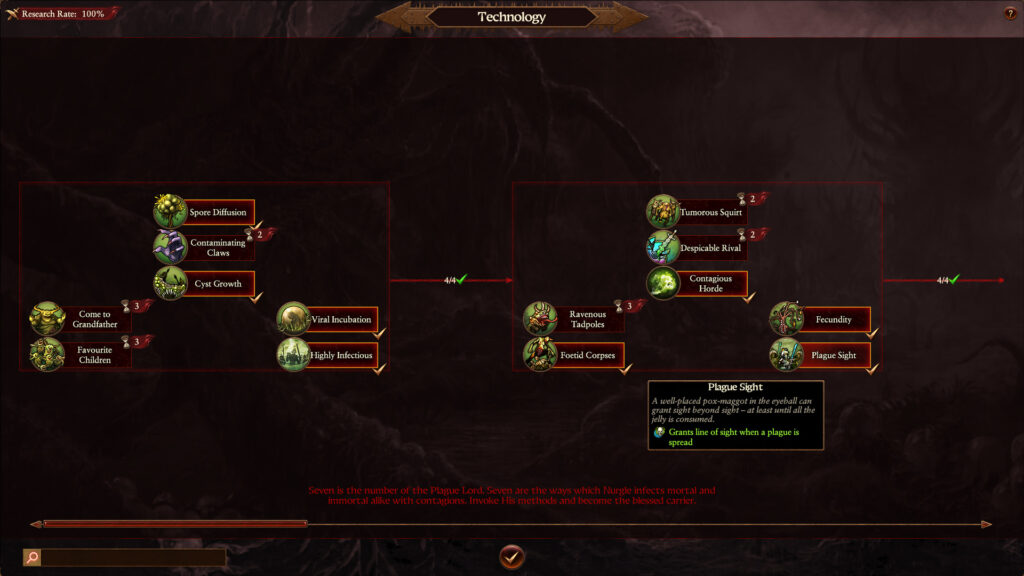
Nurgle’s tech tree has similarities with Khorne, brothers in destruction as they are, with several pods of seven technologies each, requiring four to be researched to move on to the next. This gives you a lot of options on how you want to progress and what to unlock first, as well as how important moving on to the next pod is versus picking up a particularly useful tech.
As well as the normal unit upgrades, diplomacy, and such forth, several Nurgle techs improve plagues in various ways, including unlocking new symptoms. Ironically similar to his major rival, Tzeentch, there are also several techs that add spells to Great Unclean Ones, making them powerful casters as well as oozing piles of rot.
On the note of spells and magical abilities, Nurgle has access to various army abilities. These are unlocked through technology and are charged in-battle based on how much damage your units are taking. Each also has the Chain property, meaning that it will target a specific unit then spread to nearby units, rather than targeting an area. This can be powerful or a drawback, depending on how you use it, but certainly fits the theme of contagions spreading through both armies in real time.
Also of note is the big variation between research times depending on the strength of various techs. Moving between each pod could take a significantly different amount of time depending on which techs you go for. Experiment! Such is the joy of Nurgle.
Nurgle Magic in Total War Warhammer 3
Nurgle has access to two different magic types, the new Lore of Nurgle and the Lore of Death.
Lore of Nurgle
- Miasma of Pestilence (Hex)
- The most putrescent vapour fills the air, loosening lunches and bowels, and causing violent, crippling vomiting seizures in nearby foes.
- Target unit has reduced melee attack and charge bonus.
- Overcast version changes this to all units in a target area.
- Stream of Corruption (Breath)
- A poisonous spurt of diseased gas and bile spews forth from the spellcaster’s diseased lungs, drenching the enemy in vile, choking pus.
- Long, thin cone attack that leaves a trail of damaging poison, and applies Poison! to all enemies hit.
- Overcast version deals more damage.
- Curse of the Leper (Augment)
- As the caster speaks, his followers are blessed with resilience, whilst his enemies watch in horror as their limbs wither and drop off.
- Adds armour and damage reflection to a unit.
- Overcast version increases both values.
- Rancid Visitations (Direct Damage)
- The enemy is gifted the Plague Lord’s nightmarish necrosis, causing their skin to blacken and their internal organs to mulch.
- Pours filth over an enemy, dealing damage all the while.
- Overcast version lasts longer.
- Blight Boil (Explosion)
- This filthy, pulsating blister rapidly grows before suddenly bursting, showering the enemy with its disgusting fluid and all the maladies contained within.
- Creates a massive explosion at target area, after a short delay.
- Overcast version deals more damage.
- Fleshy Abundance (Regeneration)
- The most repulsive growth spurt imaginable occurs – the wobbling mounds of fat sealing wounds as soon as they are formed.
- Greatly replenishes the hitpoints of target unit.
- Overcast version changes to units within target area.
Lore of Death
- Life Leeching
- Spellcasters who practice Death magic can channel the life force of their foes into their spells.
- Doom and Darkness
- Spirits of the departed assail the Wizard’s foes, sapping their resolve and causing dread among their numbers.
- Soulblight
- Harnessing the sickly power of Shyish, the Wizard weakens his foes’ will to survive the battle.
- Aspect of the Dreadknight
- An invisible aura of horror surrounds the Wizard’s allies. Only the bravest foes now stand before him.
- Spirit Leech
- The Wizard extends an ebon hand towards the chosen foe, leeching its spirit through tainted sorcery.
- The Puple Sun of Xereus
- A colossal orb of purple-edged darkness materialises – those who do not escape its crystalline touch are doomed for eternity.
- The Fate of Bjuna
- Following the fate of the unsmiling warrior, Bjuna, the target of the caster’s ire will laugh himself to death.